Seven days, three reversals. Anthropic is discussing a $950 billion valuation that would overtake OpenAI. Apple admits it no longer holds the model layer and prepares to open iOS to Google and Anthropic. NVIDIA brings Rubin into volume production just as Meta places the biggest GPU order in its history. In the background, the European Union backs off on the high-risk part of the AI Act, the Pentagon signs eight Big Tech contracts while leaving Anthropic out, and private capital concentrates on four labs. The week in which the industry's structural positions were publicly set in stone.
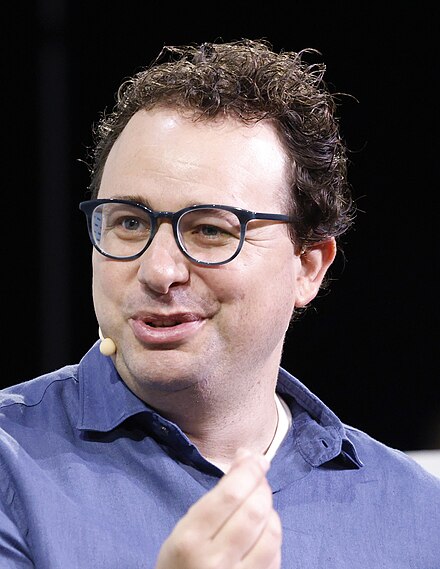
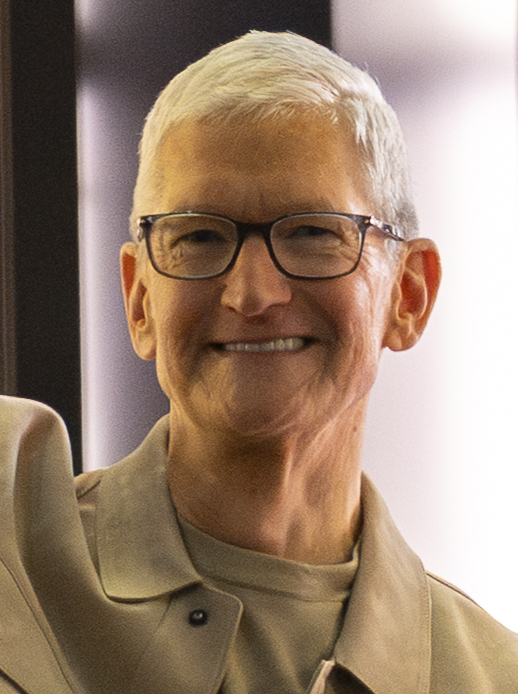
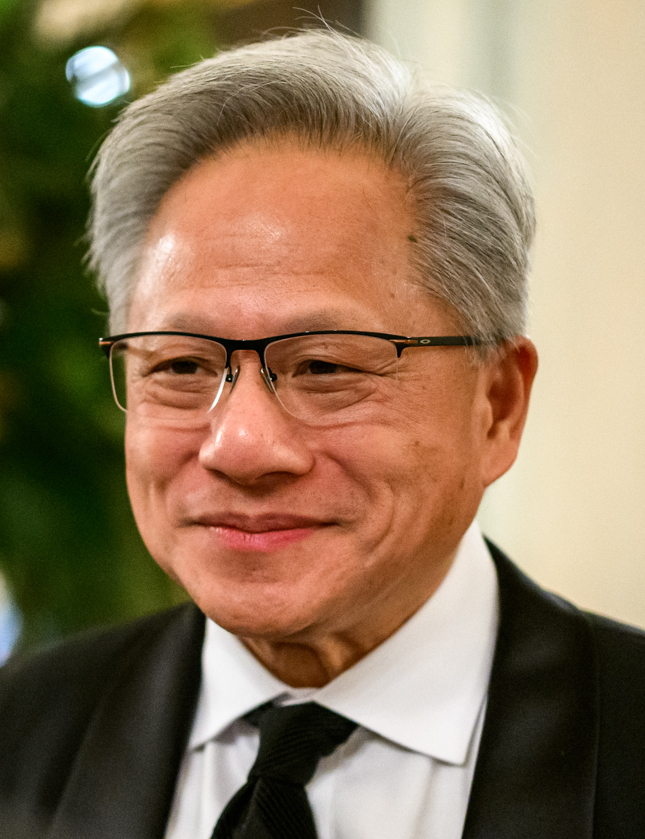
Photos: Wikimedia Commons (Tim Cook March 2026, Jensen Huang 2025, Satya Nadella 2017, Dario Amodei TechCrunch Disrupt 2023).
In this issue
- Anthropic aims for $950bn and moves ahead of OpenAI
- Apple opens iOS to third-party models
- NVIDIA Rubin in production, Meta commits to millions of GPUs
- The Pentagon signs eight Big Tech firms, leaves Anthropic out
- The European Union loosens the AI Act
- Microsoft Agent 365 GA: agent governance becomes a category
- Open weights pressure: DeepSeek V4 and Qwen 3.6
- Talent war: Meta empties Thinking Machines, OpenAI captures SaaS execs
- What to remember
- FAQ
1. Anthropic aims for $950bn and moves ahead of OpenAI
Anthropic is discussing a funding round of $30 to $50 billion that would value the company at $950 billion post-money (Fortune, 13 May 2026). OpenAI was valued at $852 billion in March 2026 in its latest round. If the deal closes on the terms discussed, Anthropic would become the largest private valuation in the world, across all sectors.
Photo: Wikimedia Commons (TechCrunch Disrupt 2023). Sources: Fortune (13/05/2026), Sacra.
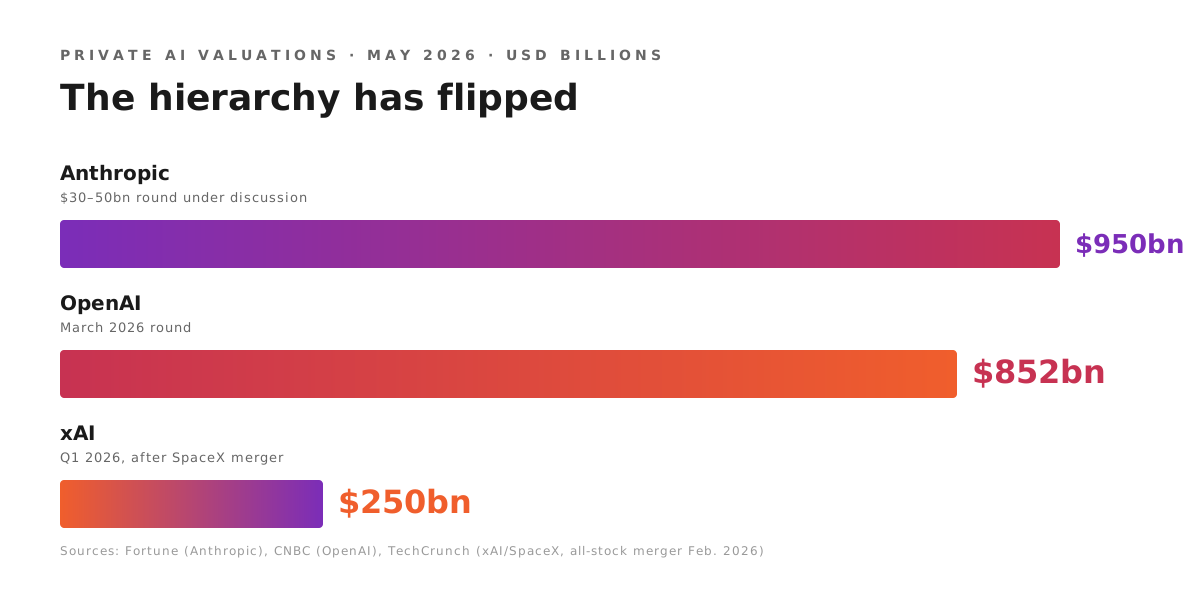
Sources: Fortune (Anthropic), CNBC (OpenAI), TechCrunch (xAI/SpaceX, all-stock merger February 2026).
The reversal is not symbolic. It endorses a precise reading of the market: enterprise profitability is now worth more than consumer audience. Anthropic's engine is the enterprise API and coding, carried by Claude Code, which is said to have reached about $2.5 billion in ARR in the first quarter of 2026 (Sacra), with a consolidated ARR estimated at $30 billion. OpenAI, at $24 billion in ARR over the same period (Sacra), is still 65% driven by consumer ChatGPT.


Crunchbase: 65% of the quarter's global venture funding concentrated in four deals (Anthropic, OpenAI, xAI, Waymo).
For operators. The concentration of value in three labs is hardening. In the first quarter of 2026, OpenAI, Anthropic, xAI and Waymo collectively absorbed $188 billion, or 65% of global venture investment (Crunchbase, Q1 2026). The rest of the AI fabric shares the crumbs. Any startup built on a single frontier supplier directly inherits the risk premium associated with this concentration.
2. Apple opens iOS to third-party models — and cedes the model layer
Bloomberg revealed on 5 May that Apple is preparing a feature internally named Extensions, which will let users choose the AI provider that powers Apple Intelligence: Siri, Writing Tools, Image Playground and the other building blocks (Bloomberg, 5 May 2026, TechCrunch). Google Gemini and Anthropic Claude are already in testing. The feature is expected in iOS 27, iPadOS 27 and macOS 27, with the official presentation at WWDC in June 2026.
Photo: Wikimedia Commons (Tim Cook, March 2026).
The announcement has an immediate symbolic effect: Apple admits it no longer holds the model layer. Apple Intelligence, launched with great fanfare in 2024, has not reached the quality needed to serve the OS's critical functions on its own. Apple is switching to being a model distributor, as it did with the search engine through Google (the Safari deal brings Apple about $20 billion a year).
The same day, Google is accelerating the integration of Gemini Intelligence into Android with an explicit promise: navigating between apps, reading the screen and executing cross-app tasks (building a basket, booking an appointment, extracting information from Gmail) (CNBC, 12 May 2026). Google is locking down Android before WWDC opens iOS to competitors.
3. NVIDIA Rubin enters production, Meta commits to millions of GPUs
NVIDIA has confirmed volume production of the Rubin architecture, the immediate successor to Blackwell, with a first cloud deployment in the second half of 2026 (AWS, Google Cloud, Microsoft Azure, OCI) (NVIDIA press release). In its wake, two structuring announcements were made this week.
Photo: Wikimedia Commons (Jensen Huang, 2025). Sources: NVIDIA, CNBC, Tom's Hardware.
Meta signs a multi-generational strategic partnership with NVIDIA for the deployment of "millions of Blackwell and Rubin GPUs" in its own data centres (NVIDIA, Meta partnership). Meta's announced 2026 AI capex reaches $115 to 135 billion, nearly double 2025.
IREN announced on 7 May an agreement with NVIDIA to deploy up to 5 gigawatts of DSX infrastructure, mainly at Childress, Texas (CNBC, 7 May 2026). 5 GW is equivalent in installed power to five nuclear reactors. The unit of measurement for AI compute is no longer the GPU, it is the gigawatt.
Rubin architecture presented in March 2026, volume production confirmed in May. Official NVIDIA YouTube channel.
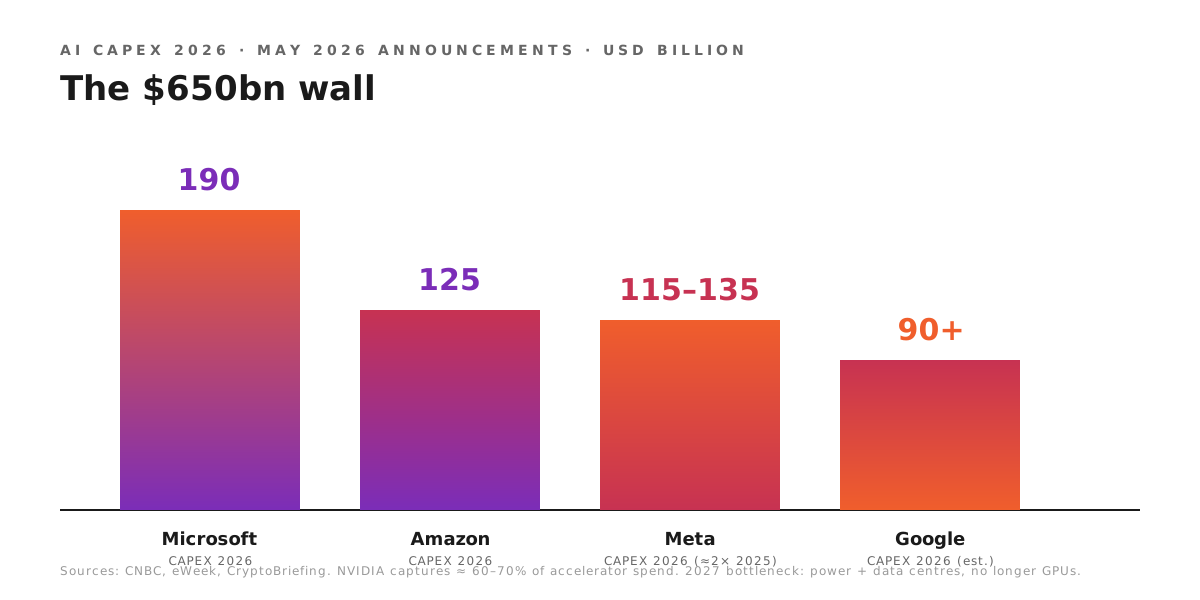
Sources: CNBC, eWeek, CryptoBriefing. Combined total of the four ≥ $530bn. NVIDIA captures about 60 to 70% of accelerator spend.
For operators. The capex wall is real. Blackwell orders placed in 2026 are delivered in 2027. The inference shortage documented at several major players in spring (Fortune, 14 April 2026) will not ease within the next twelve months. The most consuming uses — autonomous agents, code, long context — will be the first exposed to silent price rationing.
4. The Pentagon signs eight Big Tech firms, leaves Anthropic out
The US Department of Defense announced AI contracts with eight major tech companies, including Google, Microsoft, OpenAI, Meta and xAI. Anthropic was not selected (CNN, 1 May 2026). The exclusion follows the military-use restrictions that Anthropic maintains in its terms of use, which exceed the thresholds tolerated by DoD buyers.
The same defence ecosystem is seeing major financial activity this week. Anduril has finalised a round of $5 billion at a $61 billion valuation (a doubling in under a year). Shield AI has closed a $1.5 billion Series G at a $12.7 billion valuation (+140% in a year).
In parallel, the Center for AI Standards and Innovation (CAISI) obtained agreements on 5 May with Google DeepMind, Microsoft and xAI for government evaluation of models before their release (CNN, 5 May 2026). The earlier agreements with OpenAI and Anthropic, signed in 2024, are being renegotiated under the Trump administration's AI Action Plan.
For operators. A political frontier is emerging. On one side the dual-use labs (OpenAI, xAI, Meta, Google), accepted for defence uses and signatories of the government agreements. On the other the civilianised labs, which pay for their safety posture by being excluded from substantial defence revenue. Should a supplier be asked about its position on this frontier? For any operator in defence, health or sovereignty: yes, systematically.
5. The European Union loosens the AI Act — high-risk recedes
On 7 May, the European Commission obtained a political agreement on the AI Act simplification package, nicknamed the AI omnibus (Commission press release, 7 May 2026). Three concrete moves:
- The costliest high-risk obligations are pushed back to the end of 2027.
- The transparency obligation for AI-generated content is accelerated to 2 December 2026.
- The date from which penalties for other infringements are enforced remains set at 2 August 2026, with a penalty ceiling of up to €35 million or 7% of worldwide turnover.
Industrial reading: Europe has just made the AI Act lighter for B2B uses and more binding for consumer-facing players, six months before the disclosure deadline. The signal is pragmatic. It follows a year of complaints from European industrialists and pressure on the Commission after the Draghi report.
For operators. If you publish AI-generated or AI-augmented content aimed at a European public (text, image, audio, video), a labelling and disclosure obligation takes effect on 2 December 2026. Compliance is not trivial: it requires a system for traceability of AI content in your editorial and product pipelines. Six months to be ready.
6. Microsoft Agent 365 GA — agent governance becomes a category
On 8 May, Microsoft made its Agent 365 solution generally available: a control plane to discover, govern and secure the AI agents deployed in a company, including those running on AWS and Google Cloud (Futurum Group, 8 May 2026). The same day, ServiceNow and Accenture announced a joint "forward deployed engineering" programme to industrialise the move of AI agents from proof of concept to production in the enterprise (Accenture, 6 May 2026).
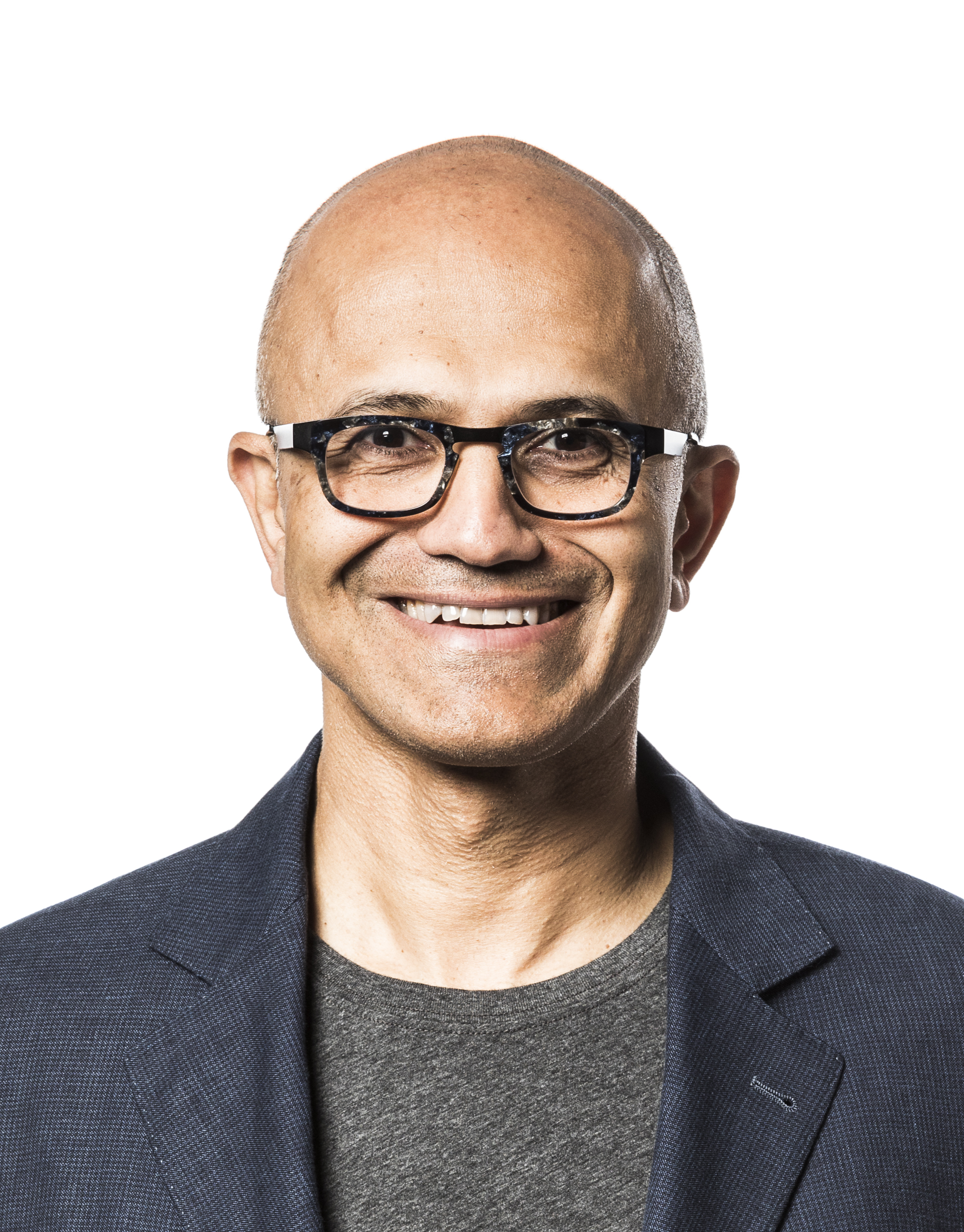
Photo: Wikimedia Commons (Satya Nadella, 2017).
Market reading: AI agent governance is becoming a separate enterprise purchasing category, analogous to identity management (IAM) or security (SIEM) in the 2010s. CIOs have so far been buying AI agents. They are now starting to buy the system that monitors, versions and stops them. Microsoft has laid the horizontal rail. What remains is to capture verticalisation (health, finance, legal) and the open source position.
7. Open weights pressure: DeepSeek V4 and Qwen 3.6 squat the benchmarks
Chinese open weights models continue to close the gap with the proprietary frontier. Two facts this week:
- DeepSeek V4-Pro and V4-Flash, released at the end of April, remain at the top of several benchmarks. V4-Pro uses an MoE architecture of 1.6 trillion parameters (49 billion active per token), pre-trained on more than 32 trillion tokens, under an MIT licence (LLM Stats).
- Qwen 3.6 Max-Preview (Alibaba) holds first place on six major agent-coding benchmarks: SWE-bench Pro, Terminal-Bench 2.0, SkillsBench and others.
The gap between the proprietary frontier and Chinese open weights is now sub-quarterly. Fine-tuning DeepSeek or Qwen on an enterprise use case is becoming a serious option, with inference economics of 5 to 20 times better than a call to the Claude or GPT API.
For operators. If your product does not depend on a strictly frontier capability (long reasoning, advanced multimodality), testing a Chinese open weights model alongside your proprietary stack is an experiment to run next quarter. The geopolitical risk remains to be modelled (hosting, licence, support).
8. Talent war: Meta empties Thinking Machines, OpenAI captures SaaS execs
Meta recruited its fifth founding member of Thinking Machines Lab this week, a lab founded by former OpenAI staff. The lab is becoming a recruitment pool more than a stable player (Invezz). In parallel, OpenAI continues to poach senior executives from enterprise SaaS — Salesforce, Snowflake, Datadog — to accelerate its sales machine (CNBC).
Reading: the AI talent war has entered a phase 2. Phase 1 (2023-2025): filling research teams with scarce ML researchers. Phase 2 (2026): rebuilding the enterprise commercial machine by poaching senior GTM executives from legacy SaaS vendors. At the very moment when AI agents are starting to cannibalise their core business. The effect is cumulative: mid-tier SaaS is losing its best salespeople at the worst possible time.
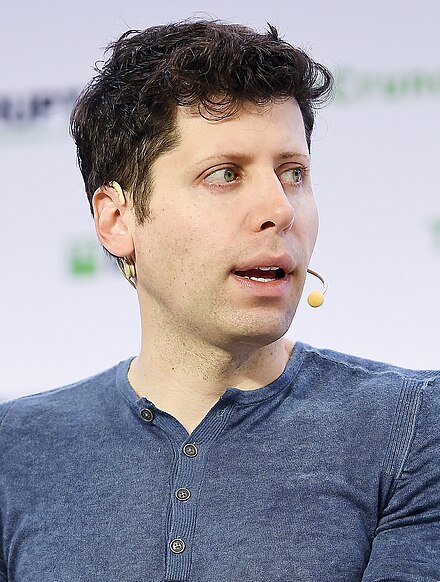
Photo: Wikimedia Commons (Sam Altman, TechCrunch Disrupt 2019).
9. What to remember
Three operational conclusions for the week.
| Theme | Move | Immediate consequence |
|---|---|---|
| Valuation | Anthropic $950bn vs OpenAI $852bn | Enterprise is worth more than consumer — adjust your dependencies accordingly. |
| Distribution | Apple Extensions, Gemini on Android | The OS becomes a toll booth again. App-layer startups will pay for mobile distribution. |
| Infrastructure | Rubin GA, Meta multi-million GPUs, IREN 5 GW | AI compute is measured in gigawatts. Plan for a 12-month shortage. |
| Regulation | EU AI omnibus, US CAISI | High-risk pushed back, AI-generated disclosure on 2 Dec. Bring your editorial pipelines into compliance. |
| Agents | Microsoft Agent 365 GA | Agent governance is a purchasing category. Without observability, you drop off shortlists. |
| Talent | Meta × Thinking Machines, OpenAI vs SaaS | Lock in your senior GTM executives now, not at Series B. |
First, the centre of gravity of valuation is shifting from consumer audience to B2B pricing power. A startup built on a single frontier model directly inherits the concentration of the associated risks. Multi-model is no longer a good practice: it is becoming a contractual requirement from enterprise buyers.
Second, the distribution layer is taking back control. Apple is ceasing to pretend to build its own model. Google is deploying Gemini Intelligence as the operating system of Android. AI startups that want to reach the mobile user will go through a commercial agreement with one of these two players, or through their consumed API. Free distribution via the app store is over.
Third, compute is no longer a financial subject but an industrial one. 5 gigawatts in Texas, millions of GPUs at Meta, $190 billion of capex at Microsoft. The inference shortage already visible at Claude and OpenAI in spring will persist. The most demanding uses — agents, long context, code — will be rationed first, in the form of rising prices or silent degradation of quality.
10. FAQ
Why does Anthropic overtake OpenAI in valuation?
Anthropic is discussing a round at $950 billion post-money thanks to an ARR estimated at about $30 billion in spring 2026, driven mainly by Claude Code and the enterprise segment. OpenAI was worth $852 billion in March 2026 on an ARR of about $24 billion, 65% of which comes from consumer ChatGPT. The private market now values B2B profitability more highly than consumer audience.
What is Apple's Extensions feature?
Extensions is a feature planned for iOS 27, iPadOS 27 and macOS 27. It will let users choose a third-party AI provider — Google Gemini, Anthropic Claude or another — to power Siri, Writing Tools, Image Playground and the other Apple Intelligence building blocks, in place of ChatGPT. Announced via Bloomberg on 5 May 2026, with the official presentation expected at WWDC in June.
What did the European Union decide on the AI Act this week?
On 7 May 2026, a political agreement on the AI Act omnibus was reached. The heaviest high-risk obligations are pushed back to the end of 2027. Transparency on AI-generated content, by contrast, is accelerated, with a disclosure obligation on 2 December 2026. The date from which penalties apply remains set at 2 August 2026.
Why does NVIDIA's Rubin change the game?
Rubin is NVIDIA's new GPU architecture, in volume production, with first cloud deployments in the second half of 2026. Meta has signed a hyperscale partnership for millions of Blackwell and Rubin GPUs. IREN is committing to deploy up to 5 GW of DSX infrastructure. The bottleneck for AI is now shifting from the GPU to energy and data centre land.
What weak signals should we watch next week?
Three deadlines. The conclusion of the Musk vs Altman/OpenAI trial (verdict expected during the week of 18 May). The first concrete WWDC 2026 announcements (June) on the implementation of Apple Extensions. And the clarification still to come on the Anthropic funding round — the name of the lead investor will be a signal about the capital centre of gravity for the coming year.
This note is the first recap in a weekly series published every Friday. The next edition appears on 22 May 2026.