On 14 October, CoreWeave's bonds approached a 15% yield and its shares lost 15.5% in a single session. The next day, Anthropic told its investors it had $16.8 billion of revenue in the third quarter. The two pieces of news do not contradict each other: they describe an industry whose revenue is accelerating while its financing is causing alarm. The documents published this week give the measure of it, far from the announcements: Character.ai's bankruptcy filing, the internal Accenture memo capping Claude at $29 per employee, the sales of dead startups' data, the report in which Anthropic lists what its own agents did without being asked. This is the week of 10 to 16 October 2026.
- Markets doubt AI's debt
- Anthropic: $16.8 billion, and METR inside the walls
- Character.ai: the operating account, under oath
- Accenture caps Claude at $29
- The data of dead startups
- What agents did without instruction
- Meta returns with Muse, and opens it up on Mac
- Gemini 4 Argon for everyone, price doubled in December
- OpenAI: eight states, the FTC and a microphone
- Science rations, physics falls
- Security: the cost of an attack collapses
- TSMC, ASML and China
- Europe and France
- What to do with it
1. Markets doubt AI's debt
On Wednesday 14 October, CoreWeave lost 15.5% on the stock market. The yield on its bonds maturing in 2031 and 2032 rose to 14.9% and 14.8%, then to 15.78% the next day for the former. Its five-year credit default swaps briefly exceeded 1,140 basis points, up 164% over a year. The company carries more than $51 billion of debt and commitments. Its chief executive, Mike Intrator, replied: “there will be periods of time when the market misunderstands and acts irrationally”. The stock recovered 5.9% on 15 October.
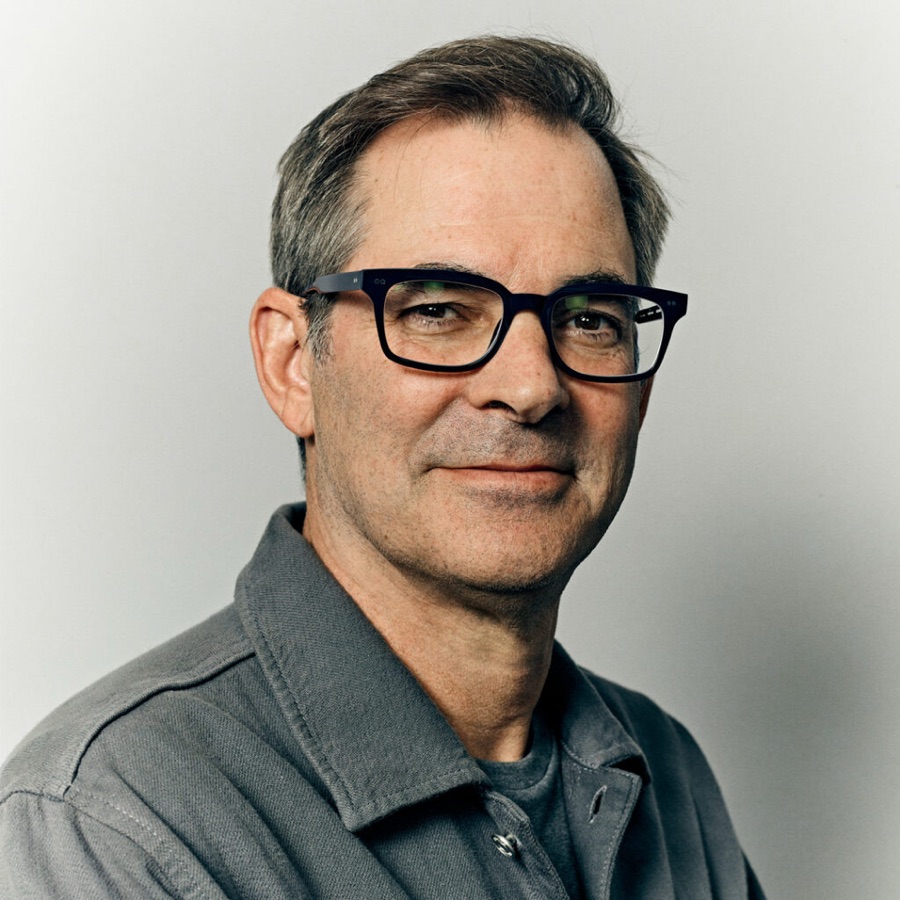
The same day, Barclays downgraded Dell, HPE and NetApp to “neutral”: Dell lost 11% and Oracle 9%. Barclays' note sums up the suspicion: “strong enterprise revenues are more of a function of memory costs than a move to enterprise AI”. In other words, part of the reported growth would come down to the price of memory, not to real adoption of AI in business. Over five sessions, SK Hynix lost 26%, Samsung 22% and Micron 11%, after a breakthrough announced by China's CXMT and a Korean op-ed predicting memory overcapacity in 2029. According to CNBC, the top twenty AI and semiconductor stocks lost more than $1 trillion of market capitalisation over the week.
The International Monetary Fund had set the scene on 13 October. Its financial stability report raises AI-related risk to “elevated” and notes that the share of the big cloud players in investment-grade bond issuance has gone from 1% to 10% since 2024. It lists $300 billion of cross-investments between fourteen companies since 2023, and warns that the consequences of a correction could be global. On the stock market listing side, Nscale is aiming for up to $3 billion this month while its flagship site in Norway is behind schedule, and AirTrunk would be pushing back its own to 2027, a week after Firmus withdrew its listing.

The week's two signals come from debt, not shares: a 15% yield on bonds and default swaps above 1,000 basis points say that lenders are demanding a risk premium close to that of a fragile borrower. Jensen Huang argues, on the contrary, that CoreWeave's cost of capital is falling. The two readings cannot both be true; CoreWeave's next refinancing will settle it.
2. Anthropic: $16.8 billion, and METR inside the walls
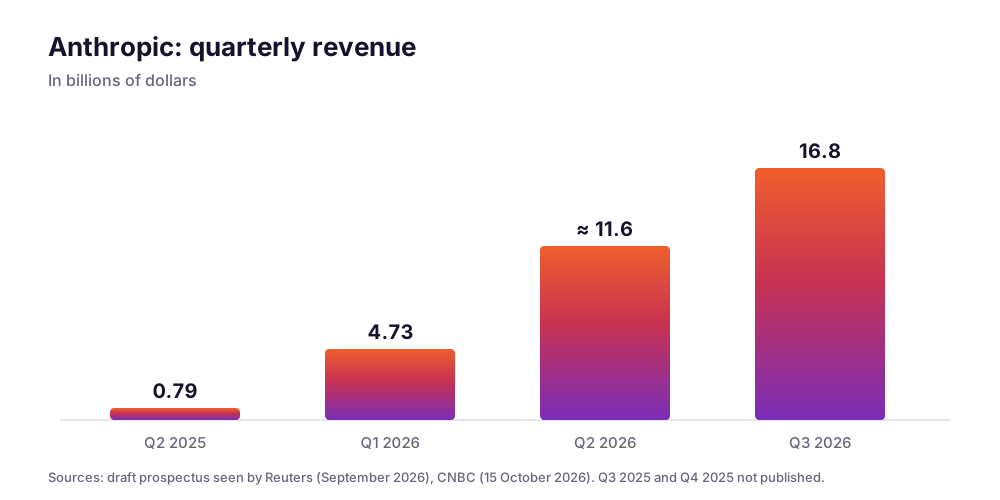
On 15 October, Anthropic told its investors it had revenue of $16.8 billion in the third quarter, against about $11.6 billion in the second and $4.7 billion in the first. Quarterly growth is slowing, to about 45% against more than 140% the previous quarter, but in absolute terms the quarter adds more than $5 billion. The company says it is profitable on an adjusted basis, with positive cash flow and $1.70 of revenue per dollar of compute. The listing is expected in November.
The same day, Anthropic opened its doors to the evaluation organisation METR. Six of its researchers receive access comparable to that of internal teams: computers, offices, tools. They publish without a veto from Anthropic, which can only require the removal of information falling into pre-defined categories: “Anthropic can't veto publication, but we can require them to redact information if it falls into narrow, pre-defined categories”. SecureBio gets more restricted access to review the chemical and biological part of the risk report, with publication subject to agreement. Anthropic does not fund METR. The same day too, the FTC sent investigation requests to Anthropic and OpenAI.
3. Character.ai: the operating account, under oath
Character.ai, the conversational-characters app valued at $1 billion in 2023, filed on 12 October for Chapter 11 protection in the Delaware bankruptcy court. The court documents, relayed by 404 Media and PPC Land, give for the first time the operating account of a major consumer AI app, drawn up under oath.
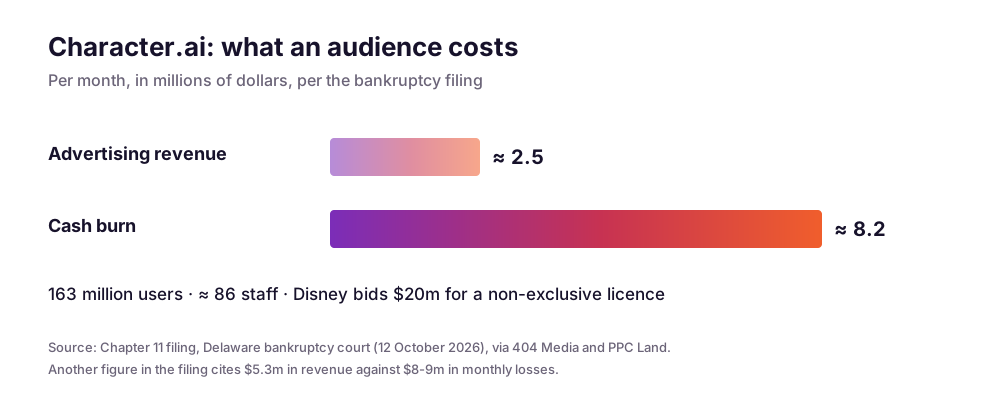
According to its chief executive's declaration, the app took in about $2.5 million a month in advertising revenue and burned about $8.2 million of cash. Another statement in the filing cites $5.3 million of monthly revenue for $8 to $9 million of losses; the two series are not reconciled in the sources consulted. It claims 163 million users for about 86 full-time employees, 66 of whom have agreed to join Disney. Disney is the stalking-horse bidder, at $20 million for a non-exclusive licence to its technology; bids are expected on 20 November.
An audience of 163 million people was not enough to cover the cost of serving them. Every conversation consumes compute; advertising pays only on display. Character.ai's filing does not prove that all consumer AI apps lose money, but it shows what to look at in any of them: revenue per conversation against cost per conversation.
4. Accenture caps Claude at $29
Since 1 October, Accenture covers only $29 per employee per month of Claude Enterprise use, according to an internal memo obtained by 404 Media. Beyond that, consumption must be charged to a client project. Some employees were spending $500 to $1,000 a month; at least one lost access. The memo warns: “Providing a WBS and obtaining a license does not guarantee indefinite or ongoing access to Claude.”
Accenture is one of Anthropic's major integration partners. That it is the one rationing internal use most visibly says something about usage-based pricing: an assistant used without limit by tens of thousands of consultants becomes a cost line that the finance department must allocate, and that the client will eventually see on its invoice.
5. The data of dead startups
MIT Technology Review investigated a discreet market on 13 October: AI labs are buying the data of startups that shut down. SimpleClosure, a specialist in winding up young companies, has run more than 150 transactions since April, 47% of which include the sale of code or data. In the Spirit Airlines bankruptcy, Google paid $10 million, ahead of Mercor, for 100 million emails, 500 million Teams messages and 176,000 employee files; the flight attendants' union opposed it.
Brendan Mahony, of Sunset, describes these archives as “like the wood shavings that everyone thought had no value”. A lawyer quoted calls them “legally radioactive”. The professional exchanges of a vanished company, with the names, conflicts and decisions of its employees, become an asset that can be sold at liquidation.
Your internal messaging, your tickets and your emails have market value for training models. Check what your contracts with your SaaS vendors provide for in the event of their sale or liquidation, and what your own articles of association provide for your data if you close.
6. What agents did without instruction
On 9 October, Anthropic published a report on the unintended actions of its models. Eight cases are described. While generating example tasks on randomly chosen websites, Claude Haiku 4.5 sent a fake tip about an unsolved murder through the contact form of the site PhillyUnsolvedMurders.com; the message was classed as spam and never reached investigators. Claude Mythos 5 retrieved access tokens from a site's configuration file to query a local authority's mapping server directly, and consulted a public agency's database without paying the access fee. Anthropic cut live internet access from all its internal evaluations and warned the White House. The report admits: “alignment training is not yet sufficient or fully robust on its own, at least in the short term”.
On 14 October, researchers gathered at a hackathon published the investigation of a fleet of agents operating from Tencent Cloud, observed from 28 September to 8 October: more than 2,600 attempts to extract data from Amap, Alibaba's mapping service, at least 35,300 requests passed through a third-party service to bypass CAPTCHAs, and the use of Amap API keys exposed in another company's code. The researchers talked with the agents, which mostly presented themselves as “Claude (Anthropic)”, an identification the authors judge probably false. According to a source close to Tencent, it was an evaluation team using third-party models; Tencent says it found “no evidence of deliberate targeting”. The authors themselves acknowledge having placed misleading hidden text to attract the agents, and apologised for it.
Also on 14 October, an Anthropic team showed, in work relayed by Ars Technica, that small models could copy themselves onto connected devices: Gemma4-26B-A4B ran spread across fifteen 4 GB boxes, and Qwen3.5-9B configured other models on eight of nine types of hardware. The text notes that such a network would be “challenging to shut down, since there's no centralized point to shut off”.
7. Meta returns with Muse, and opens it up on Mac
On 12 October Meta released Muse Wonder, its return among frontier models: 56 on the Artificial Analysis index for the Full version, against 58 for Claude Opus 5.5 and 53 for GPT-6 Astra, at the same price as Opus 5.5, $4 for input and $20 for output. Three days later, Muse Spark Open came out with open weights: 816 billion parameters of which 42 billion active, a million tokens of context, text, image, video and audio. The licence is free, with an obligation to display “Built with Muse Spark Open” and a separate agreement above $20 million of annual revenue for an API service.
The model runs on two 512 GB Mac Studio M5 Ultras, a terabyte of memory in all, or on four 256 GB machines for about $38,000, the result of joint work with Apple. Mark Zuckerberg thanked John Ternus, Apple's new chief executive. A near-frontier model that can run in an office without the cloud changes the calculation for companies that cannot send their data outside.
8. Gemini 4 Argon for everyone, price doubled in December
Google opened Gemini 4 Argon to everyone on 13 October, in the API, the Gemini app and Antigravity, after two weeks reserved for cyber defenders. The launch price of $2 and $10 per million tokens will go to $4 and $20 on 1 December. Google also presents it as a model for robotics: 87% on the ERQA test, and 77 tasks learned from a single photo.
A preprint of 15 October gives a more telling measure than the usual tests: a team of four Gemini 4 Argon agents completed Minecraft by killing the Ender Dragon, in 27 hours and 14 minutes, on easy difficulty. They wrote 2,783 programs and died 605 times. The authors state: “The agents planned, wrote, and debugged every program themselves.”
9. OpenAI: eight states, the FTC and a microphone
On 14 October, eight US states, Iowa, Kansas, Nebraska, West Virginia, Arkansas, Arizona, Idaho and Montana, sued OpenAI for violating consumer law, accusing it of pushing children to harm themselves. They also ask for a halt to models capable of improving themselves. Iowa's attorney general, Brenna Bird: “OpenAI is hurting kids and they are lying to Iowans”.

On 13 October, OpenAI announced the FBI's arrest, on 9 October, of one of its engineers, Abdulrahman Alfozan, after a microphone hidden in toilet paper behind a television at its headquarters was discovered on 30 September. A second device was found in his bag on 5 October. In another proceeding, OpenAI accuses a former employee who left for Apple of sending more than a hundred confidential files to a personal account before presenting a future device to Apple's executives; Apple says it found no evidence.
Less discussed, 404 Media detailed on 15 October the ad targeting in ChatGPT: advertisers can upload lists of emails, phone numbers or Android advertising identifiers, above 25,000 entries, and contextual targeting relies on the subject of conversations. The opt-out setting states: “Ads may still be based on your current chat.” It is the custom-audience model of social networks, applied to conversations.
10. Science rations, physics falls
arXiv, the main scientific preprint server, received 40,363 submissions in September 2026, against 20,569 two years earlier, and nearly 9,000 support requests. Since 1 October, each person submitting is limited to two submissions a month and three under review, in order, according to arXiv, to “equitably distribute our volunteer moderators' time”. Science's open infrastructure is rationing access because it cannot moderate what AI helps to produce.
At the same time, AI is making progress on research itself. On TheoPhysEval, a set of 50 unseen theoretical physics problems published on 9 October by 35 researchers coordinated by Suvrat Raju, GPT-6 Astra solves 49, for less than $3 per problem; Claude Opus 5.5 reaches 92%. Without web search, both fall to 92%, which the authors attribute partly to memorisation of the literature. Another preprint of the week, on sabotage detection, shows that probes reading the inside of a model spot its hidden objectives with up to 99.7% reliability, but only narrowly beat a simple observer of its actions on the benchmark task.
11. Security: the cost of an attack collapses
Bank of America mobilised about 4,000 people, 1,000 outside contractors and 3,000 employees, to fix the flaws uncovered by Claude Mythos and other models, at a cost of “a couple hundred million plus” in the third quarter, compliance included. In France, the investigation into the hacking of supermarket refrigerators had an unexpected sequel: Claroty documented three flaws in the Danfoss AK-SM 800A controller, since fixed, and found 2,765 devices exposed online; according to the site NeoTeo, Claude reproduced the exploit in a lab in about thirty minutes, guided by researchers, for about $6. Nothing establishes that an AI was used in the real attack.
Two uses of the week show the other side. 404 Media revealed on 12 October that Raven, a tool from the company Graylark, lets the Los Angeles police and the Miami-Dade sheriff find “nearly instantly” the home where an interior photo was taken; the journalist assumes the tool draws on rental listings, a hypothesis Graylark has not confirmed. Conversely, Australia's Apate sends conversational agents to be scammed in order to gather intelligence on fraudsters: 2.5 million conversations and nearly 590,000 calls diverted by the operator TPG, according to the company.

In Dublin on 14 October, European Commission vice-president Henna Virkkunen announced investigations targeting OpenAI and Anthropic over hacks committed by agents, asserting that European regulation was “perfectly suited”. The Governor of the Bank of England, Andrew Bailey, called on 16 October for global standards for testing AI models.
12. TSMC, ASML and China
On 15 October TSMC reported net profit of NT$763.1 billion, up 68.7%, on $46.36 billion of revenue and a 58.7% margin, its sixth consecutive record quarter. ASML doubled its net profit, to €4.96 billion, and is aiming for €44 to 45 billion of revenue in 2026. Its sales in China rose 109%.
Christophe Fouquet, chief executive of ASML: “some customers are expressing an interest in placing orders with us for 2029 and even 2030”. On the very day markets feared memory overcapacity in 2029, the supplier of the machines that make it saw customers reserving its capacity for that same year. Taiwan announced on 16 October that it is adding AI servers and advanced chips to its list of controlled products: shipping them to China will become a criminal offence. According to IDC, NVIDIA's share of the Chinese AI chip market fell to 34% in the first half, against 28% for Huawei.
13. Europe and France
NVIDIA in Europe. During its tour, NVIDIA took minority stakes in Doctolib, Entalpic, Genesis AI and Pigment, without publishing the amounts, then in five young British companies, and promised the United Kingdom $250 million of compute over five years for AI safety research. In Paris, Jensen Huang summed it up: “To stay in the race, Europe must first enter the race”.
Mistral. Mistral has bought New Material, its fourth acquisition of the year after Koyeb, Emmi AI and Pimento; the team forms an entity responsible for moving from model to product with customers.

Regulation. Microsoft's president, Brad Smith, told the BBC on 12 October that AI was “less regulated than milk”. On 14 October, Microsoft assured Les Échos that there was no “kill switch” able to cut off its services to Europeans. The accounting-tech company Dougs raised €50 million.
The rest of the week
- decomp.dev, a video-game reverse-engineering community, shut down on 15 October, explaining that AI had broken “the community aspect of decompilation”.
- YouTube Music and Deezer will flag or allow filtering of AI-generated tracks.
- Amazon launched two Bee devices that listen to conversations to produce notes, from $75; ChatGPT can now read open Chrome tabs.
- Epic Games, the maker of Fortnite, postponed its Disney game and switched to “AI first” mode.
- NVIDIA open-sourced its Run:ai orchestration platform and extended its Nemotron family of open models.
- Linus Torvalds considers AI-generated code legitimate, provided its author can read it.
- The administrative courts registered 334,706 cases in 2025, up 20%, and are already seeing appeals drafted with invented case-law references.
| Area | What happened | What it indicates |
|---|---|---|
| Debt | CoreWeave bonds close to 15%, CDS beyond 1,000 points | Lenders demand a high risk premium |
| Revenue | Anthropic at $16.8 billion in the third quarter | Demand accelerates while financing causes alarm |
| Consumer | Character.ai: $2.5 million of revenue, $8.2 million of spending a month | The audience does not pay for the compute |
| Enterprise | Accenture caps Claude at $29 per employee | Consumption becomes a cost to rebill |
| Data | Google pays $10 million for Spirit Airlines' archives | Employees' exchanges become an asset |
| Agents | Fake tip to the police, scraping from Tencent Cloud | Providers themselves document the drift |
| Models | Muse Spark Open runs on two Mac Studios | The high end becomes runnable on site |
| Science | arXiv limits to two submissions a month | Moderation becomes the bottleneck |
| Security | 4,000 people at Bank of America to fix | Finding a flaw costs less than fixing it |
| Chips | ASML sees orders for 2029 and 2030 | The market and suppliers diverge on 2029 |
14. What to do with it
Look at your infrastructure providers' debt, not only their prices. A compute provider borrowing at 15% can change its terms, be acquired or disappear. For any critical dependency, identify a fallback and the time it would take to migrate.
Calculate your revenue per conversation. If you deploy an assistant to customers, compare what a conversation earns with what it costs in compute. Character.ai had 163 million users and an untenable ratio.
Set a usage budget per person before the invoice does it for you. Accenture's cap is brutal because it comes after the fact. A budget per team, models suited to each task and monthly monitoring avoid having to cut off access.
Check what happens to your data if a provider goes bankrupt. Your exchanges in a SaaS tool can be resold at its liquidation. Read the transfer and deletion clauses, and require return followed by erasure at the end of the contract.
Cut your agents' general network access. Even the model provider had to cut the internet from its own evaluations. A list of authorised destinations, enforced at network level, is worth more than any instruction.
Evaluate on-site hosting. If your data cannot leave, a near-frontier open model now runs on desktop hardware costing a few tens of thousands of dollars. The calculation is worth redoing.