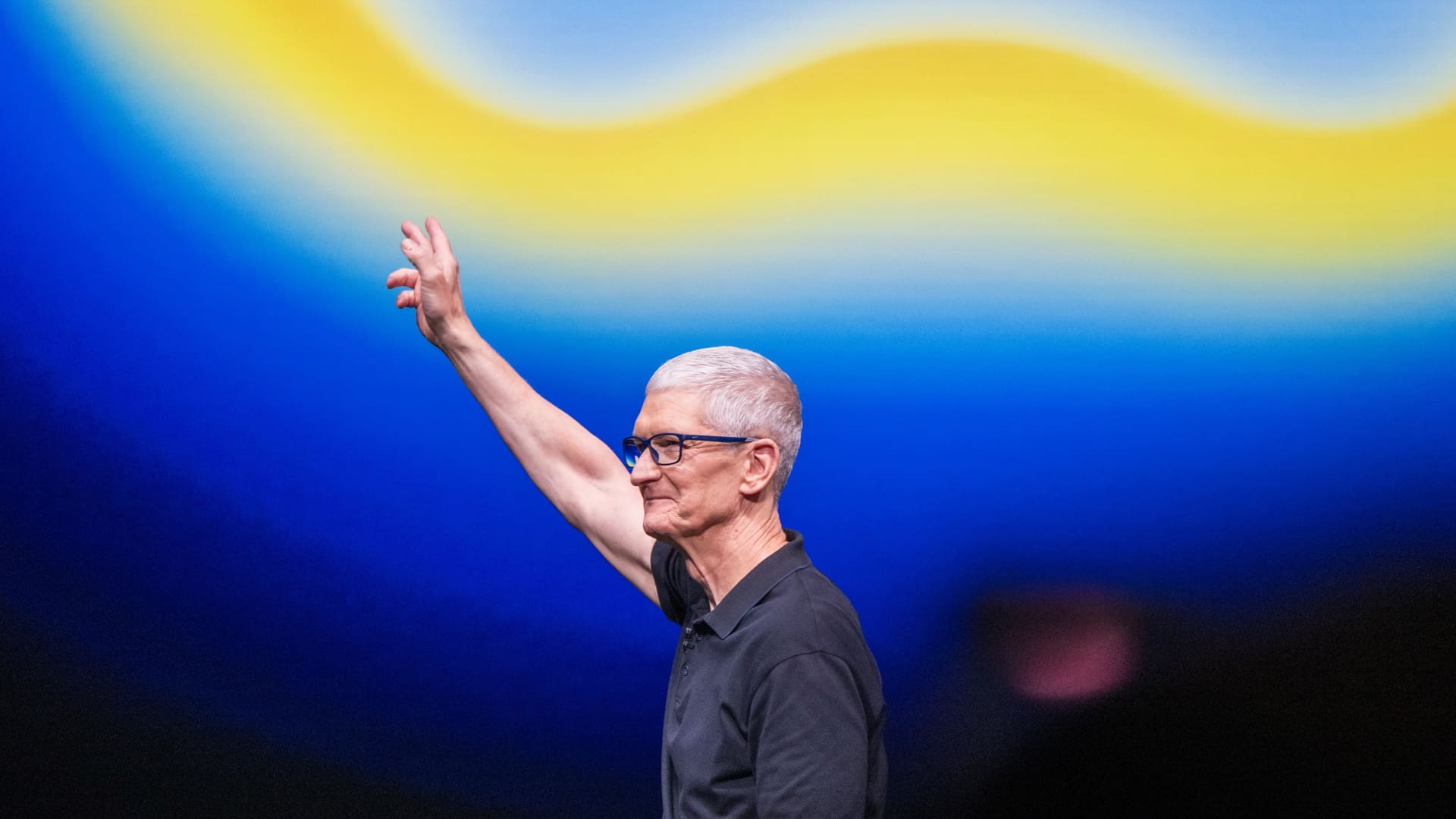
On 8 June 2026, at Apple Park, Apple presented the biggest overhaul of Siri since its birth in 2011. What is new is not just a better assistant: it is who makes it work. Under the hood of the new Siri, Google Gemini now runs. And right after the keynote, Apple published a statement few manufacturers would dare to own: because of the Digital Markets Act, iOS 27 and iPadOS 27 will arrive in Europe without the new Siri. France, like the 26 other countries of the Union, is affected. Here is what was actually announced, and why these two facts matter more than the rest.
 ×
×

Apple WWDC 2026 keynote — Apple Park, 8 June 2026 (76 min)
1. What Apple announced
Let us start with the facts, separated from the marketing. The keynote rested on three pillars: a rebuilt Siri, a wave of Apple Intelligence features in apps, and an overhaul of the software branding, now aligned on a single number: iOS 27, iPadOS 27, macOS 27 (internal name "Golden Gate"), watchOS 27, tvOS 27 and visionOS 27.
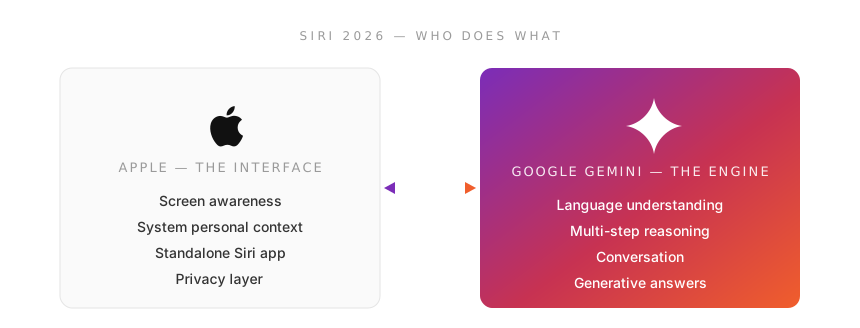
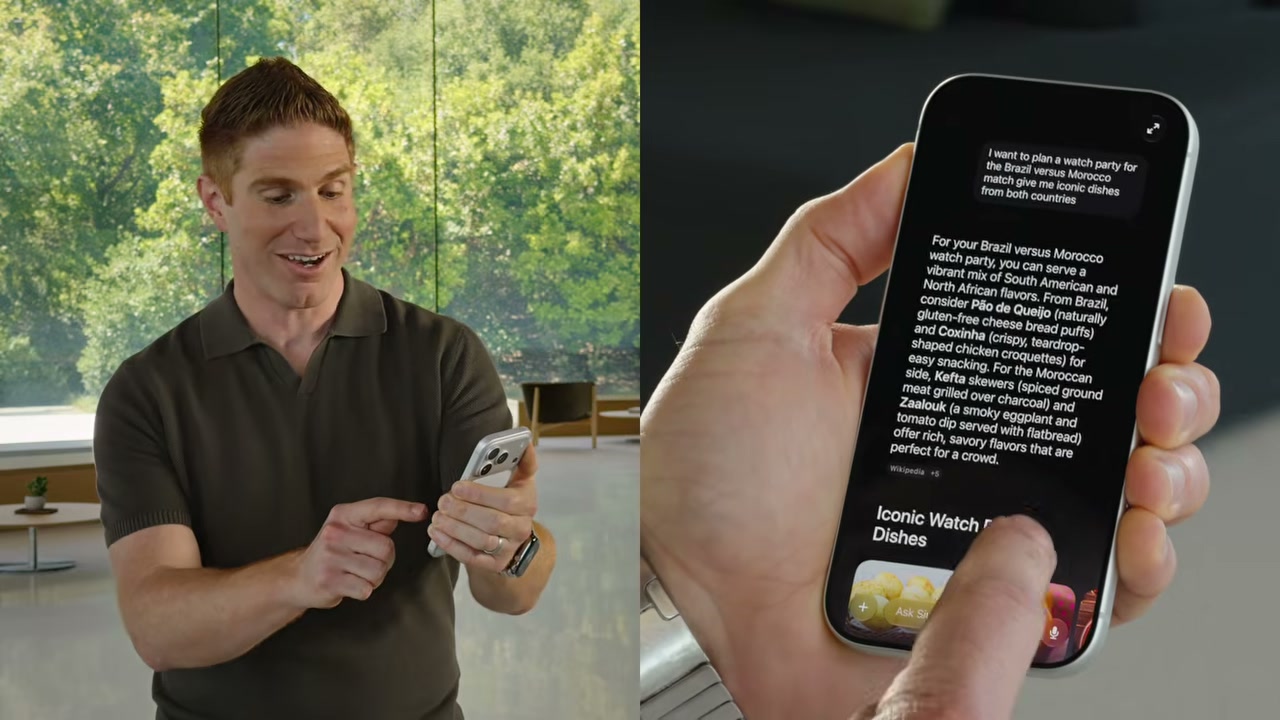
The new Siri is described as an assistant "deeply aware of personal context and of what is on the screen". Concretely: it sees what you are looking at, cross-references your data across apps, holds a genuine multi-turn conversation, and gets its own standalone app — while remaining integrated throughout the system. Craig Federighi set out the official line in one sentence: "We believe privacy in AI is non-negotiable".
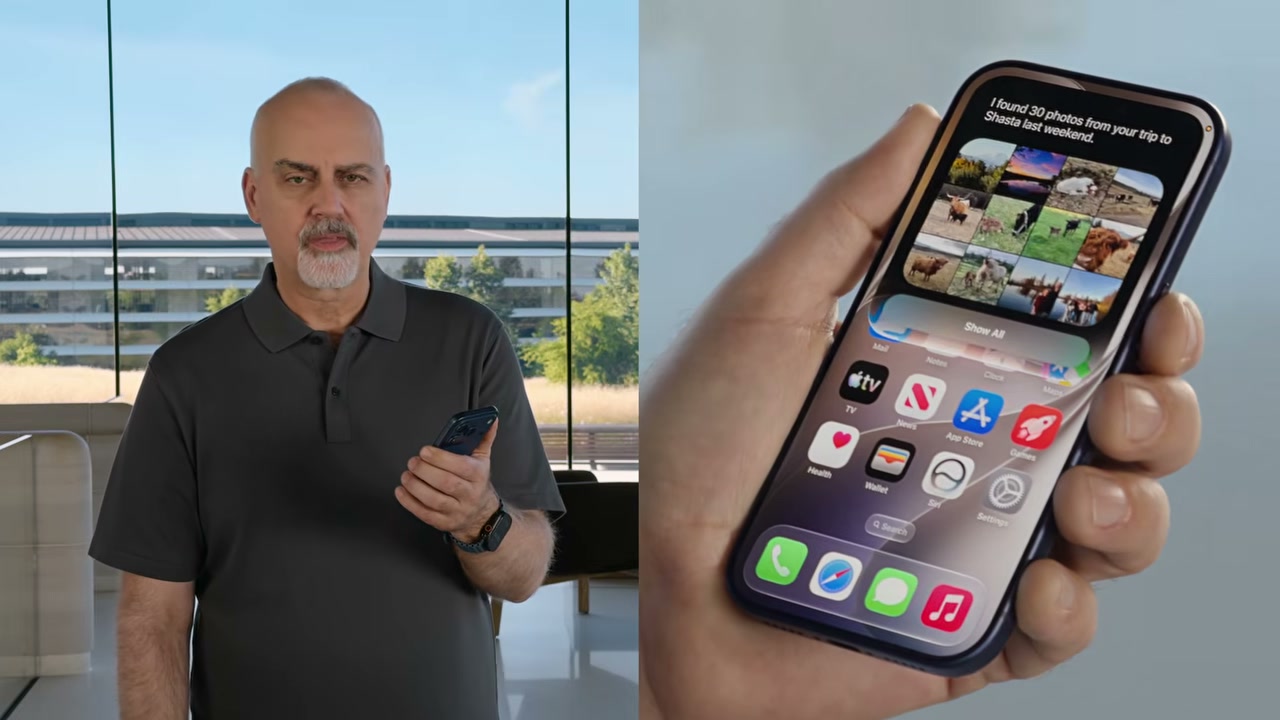
On the Apple Intelligence side, the list of novelties is concrete and geared to daily use:
- intelligent tab management in Safari;
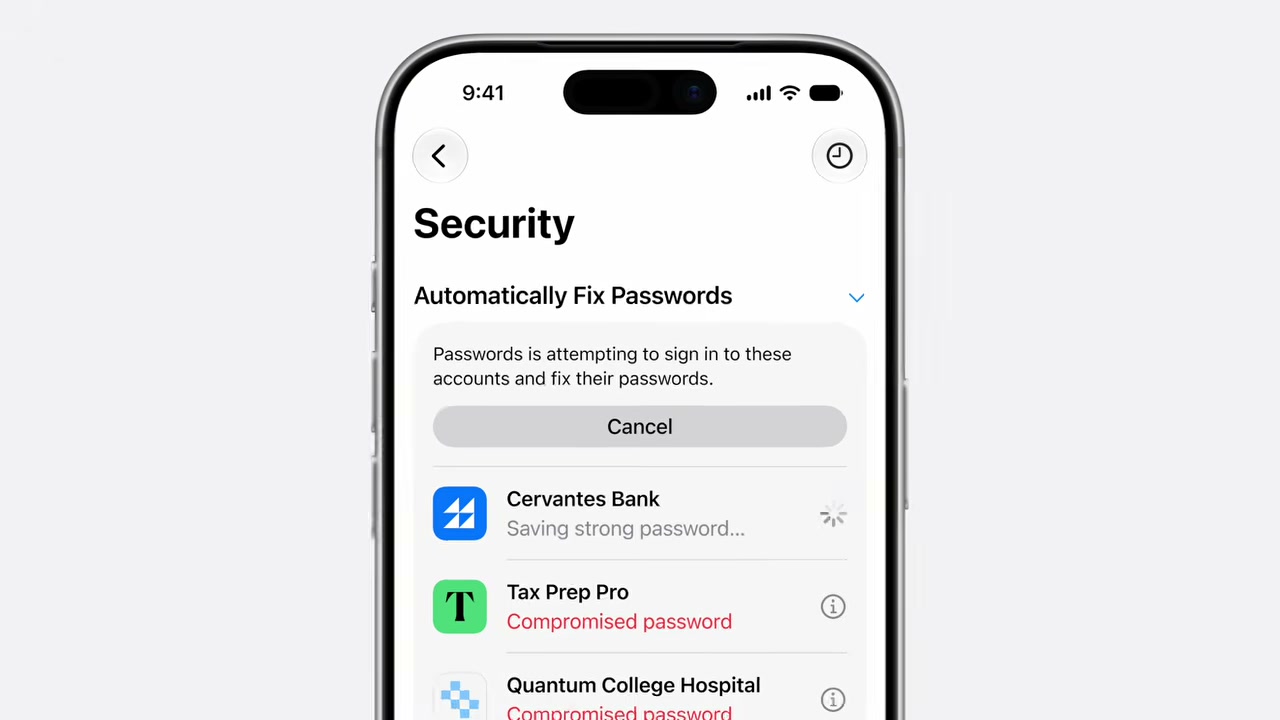
- one-tap password updates;
- context awareness from one app to another;
- reply suggestions in Messages;
- the Phone app retrieving context from Mail and Messages during a call;
- the Home app with finer security camera notifications;
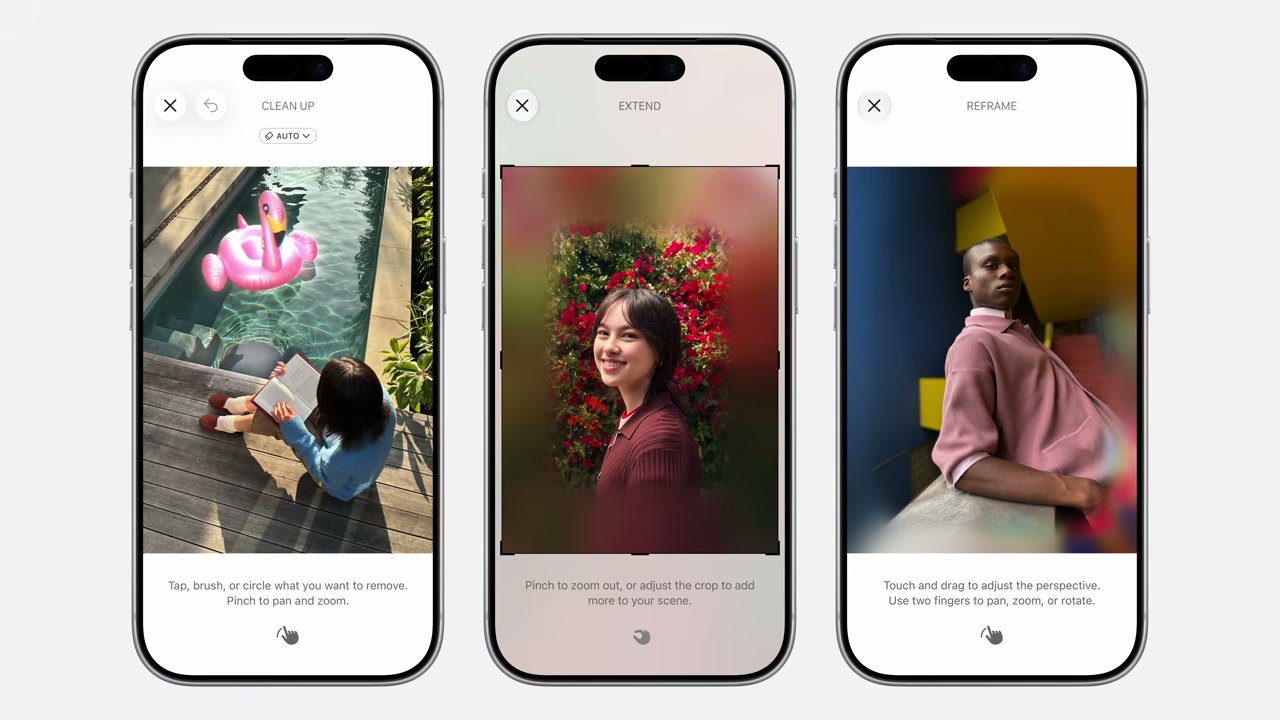
- generative photo editing — "Reframe", "Extend" and "Cleanup" tools — and a revamped Image Playground;
- system dictation, Shortcuts driven by natural language, and peri-menopause and menopause tracking in Health.
And a detail that weighs as much as the technology: it was Tim Cook's last WWDC at the helm. We come back to this at the end.
2. Siri now runs on Gemini: the real admission
For three years, Apple sold the idea of an in-house AI, processed locally, specific to its silicon. WWDC 2026 marks a switch: the reasoning engine of Siri is Google's Gemini family of models. Apple keeps the interface, the privacy layer and the system integration; Google supplies the intelligence. To understand why Apple got here, we have to go back two years.
Two years late, and an admission
At WWDC 2024, Apple was already promising this Siri: able to read the screen context, act within apps, know your life. The feature was due out in spring 2025 with iOS 18.4. It never came. In March 2025, Apple acknowledged, in a statement slipped out on a Friday evening, that the "more personal Siri" was being pushed back "over the course of the year". According to Mark Gurman (Bloomberg), part of the AI division judged internally that the promised features would be purely abandoned and rebuilt from scratch. The blockage was technical: running models powerful enough locally saturated the hardware, forcing Apple to choose between throttling the features or slowing the device.
The rebuild "from scratch" did happen — but on someone else's engine. That is the real content of the 2026 announcement: it is not that Apple added Gemini, it is that Apple spent two years trying to build this intelligence in-house, failed to hold it, and ended up renting it from Google. The keynote sells a novelty; above all it closes a failure.
This is not a strategic mistake for all that. Apple knows how to make products; training a frontier model and keeping it at the state of the art is another trade, at another pace of capital. Recognising that you will not catch up with OpenAI, Google and Anthropic on the model, and buying the best available engine to hide behind your brand, is a lucid decision. Apple's bet: the user does not care about the engine as long as the experience is smooth and their data protected.
The $20 billion irony
Except that this engine is Google's. And the two companies already have the most singular financial relationship in tech: Google pays Apple around $20 billion a year to remain Safari's default search engine — an arrangement that a US federal court found anticompetitive in 2024, and that Google is contesting on appeal. Apple already cashed Google's cheques on search. It now depends on it for intelligence too. The same partner-rival feeds both Apple's services margin and the brain of its assistant. This double dependence is not an accounting detail: it places the future of the iPhone experience in the hands of the company Apple is supposed to differentiate itself from.
And it weakens Apple's historic privacy narrative. "On-device", "Private Cloud Compute": the marketing rested on the idea that your AI stayed at home. A Gemini engine, for its part, is a third-party cloud service. The "privacy layer" Federighi speaks of becomes the packaging of an engine Apple does not control. It is tenable — Google and Apple can contractually guarantee strict data isolation — but the promise is no longer "your AI is yours", it is "trust us to frame someone else's AI".
3. Meanwhile, the man who designed the iPhone works for OpenAI
→

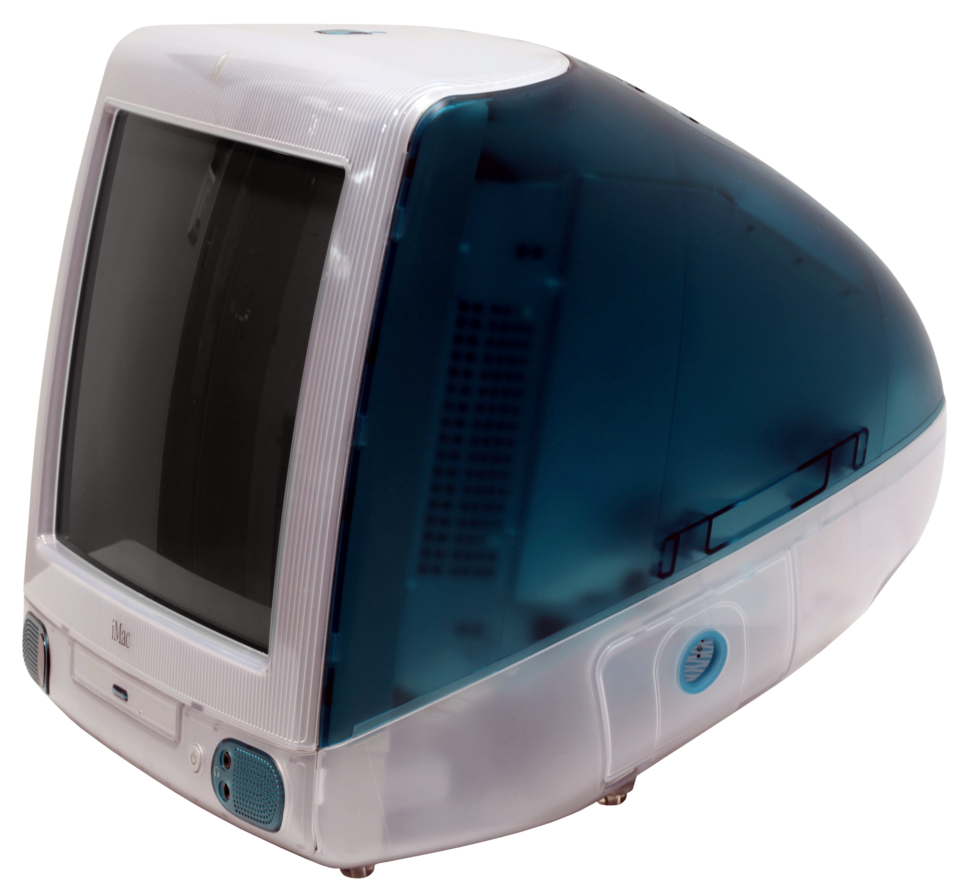
To gauge what WWDC 2026 really says about Apple, look at who was not on stage. Jony Ive shaped the iMac, the iPod and the iPhone for nearly thirty years in Cupertino, as Apple's head of design. He left the company in 2019 to found LoveFrom, an independent creative studio set up with Australian designer Marc Newson — the name comes from a phrase of Steve Jobs about "making things with love". LoveFrom has remained discreet, choosing its clients (Airbnb, Ferrari, the British crown) rather than mass-producing.
Then OpenAI came for him. In May 2025, Sam Altman's company bought the AI-device startup co-founded by Ive for about $6.5 billion. LoveFrom is now designing there a range of consumer objects built around ChatGPT. The first would not be a phone but a screenless smart speaker, fitted with a camera, sold for between $200 and $300: a "soothing" companion that observes its surroundings, suggests actions (proposing a bedtime before a meeting, for example) and would even allow purchases by facial recognition. A lamp and connected glasses would follow, in 2028 or later. The guiding idea is to take AI off the touchscreen — exactly the format on which Apple built its empire.
Except that the project stumbles before it even exists. The startup was called io — a name OpenAI had to abandon: in April 2026, a federal court in California ruled for the young company iyO on the trademark question and issued an injunction barring OpenAI and Ive from using "io". iyO has since widened its complaint to accusations of theft of trade secrets, targeting in particular Apple's former vice-president of product design who moved to OpenAI. Result: the first device, at one point announced for 2026, is pushed back to 2027, with no public name and entangled in litigation. The break has been launched, but it limps.
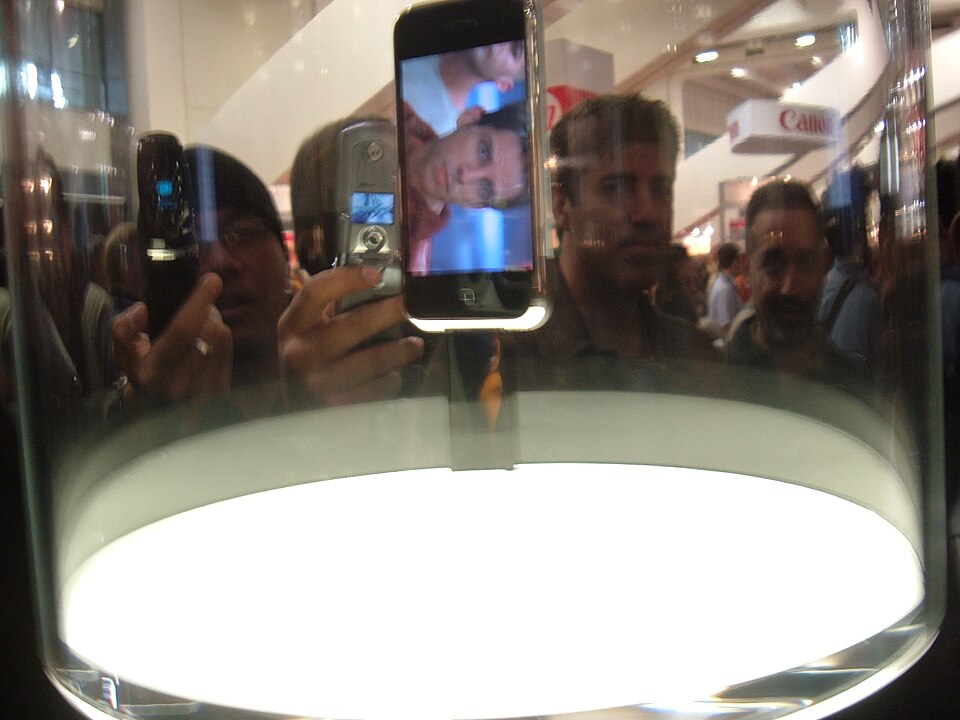
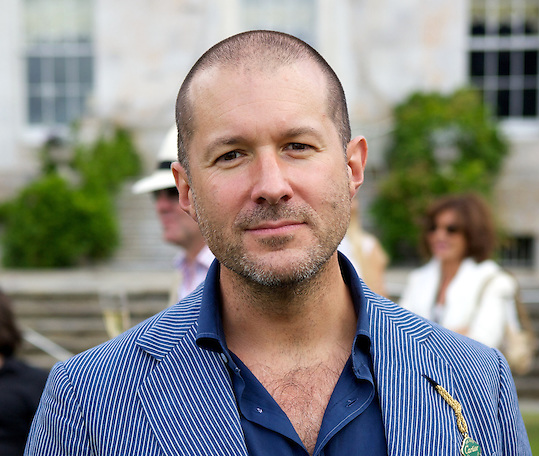
And for anyone doubting that Ive still designs at the highest level, his latest creation arrived three weeks before WWDC. On 25 May 2026, in Rome, Ferrari unveiled its first 100% electric car, the Luce, co-signed by LoveFrom — five years of work with Maranello. A 1,035-horsepower saloon-coupé, 122 kWh battery, from €550,000 ($640,000), production at the end of 2026.
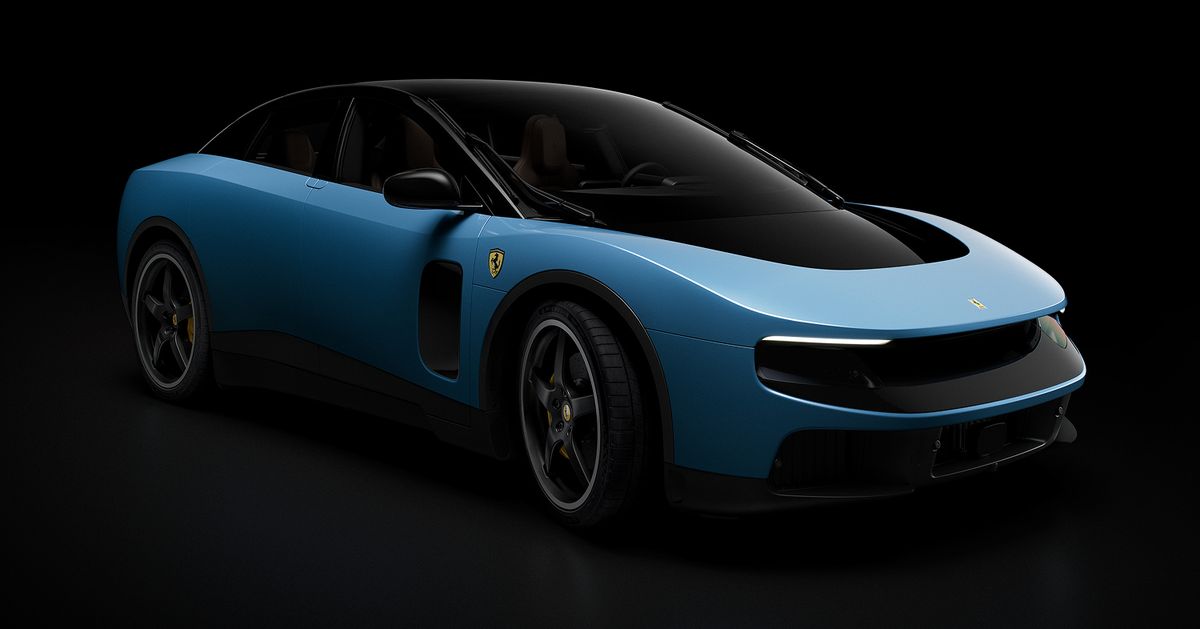
Ferrari Luce — presentation, May 2026
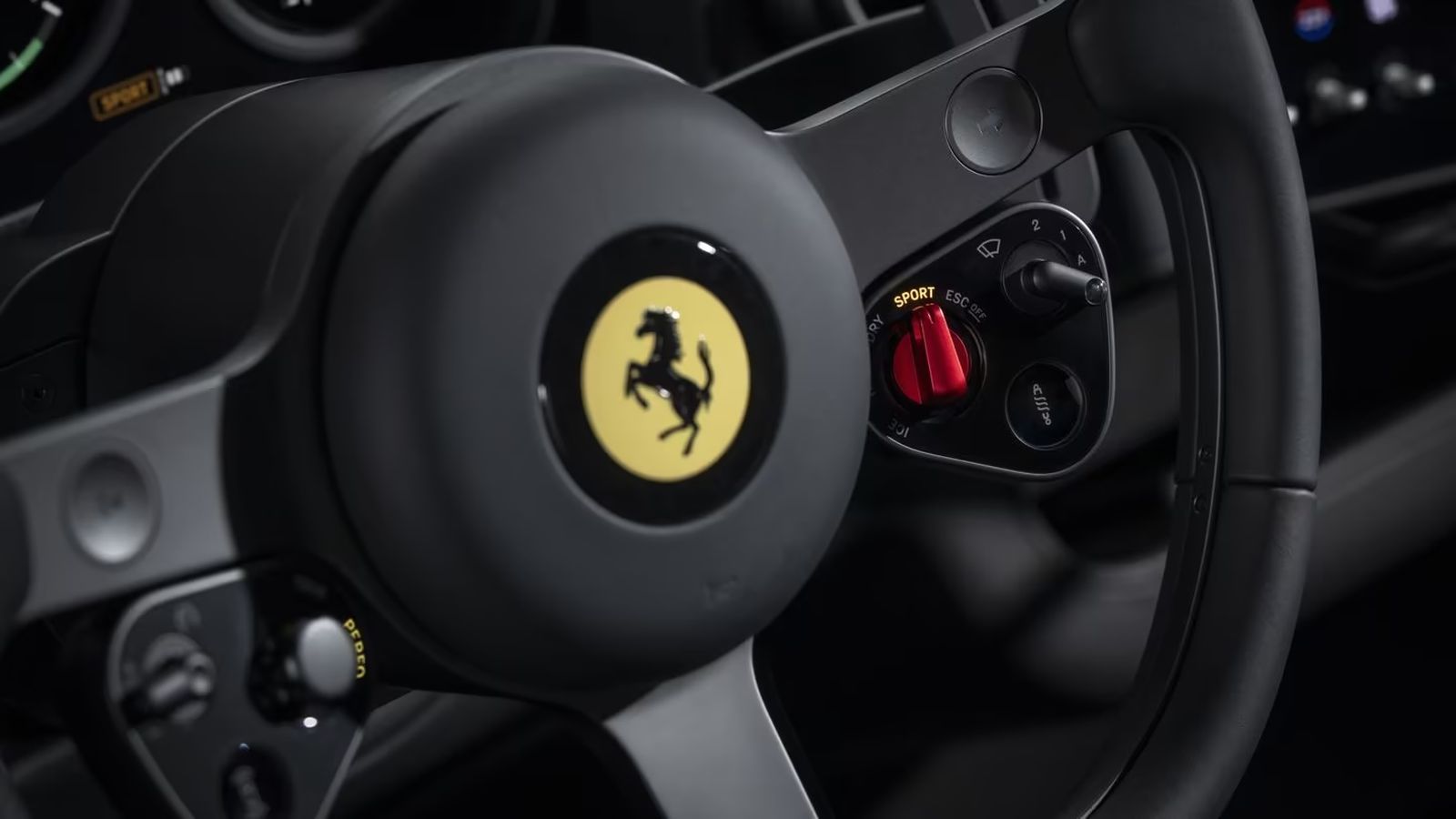
The detail that ties it all together: inside the cabin, Ive and Newson have banished the large touchscreen in favour of buttons, dials and levers in glass and aluminium. The same man refuses the screen in a Ferrari and removes it from the device he is imagining for OpenAI. The philosophy is consistent — and diametrically opposed to the one that made the iPhone's fortune.
The man is not in retirement. He has moved to the competitor, and there he is designing the break.
Put the two facts side by side. The brain of Siri is Google. The designer of the next great AI device was recruited by OpenAI. Apple keeps the distribution, the brand, the silicon and more than a billion users — a moat nobody crosses overnight. But on the two building blocks that made its legend — intelligence and breakthrough design — it now depends on its two direct rivals. That is where the new Siri becomes a signal: the iPhone slides from the status of object of desire to that of mere medium. A premium commodity, admittedly, but a commodity: a beautiful screen on which someone else's AI runs, pending the device that may no longer need a screen at all.
4. iOS 27: who gets it, and what speeds up
Apple stressed performance rather than feature inflation: photos loading 70% faster, AirDrop transfers 80% faster, CPU schedulers reworked for multitasking, smoother animations, faster start-up. The system is also described as "available to more users than any version of iOS": iOS 27 installs all the way back to the iPhone 11.
Beware of the trap: installing iOS 27 does not give access to the new Siri. The AI features require recent hardware.
| Device | iOS 27 | Siri AI / Apple Intelligence |
|---|---|---|
| iPhone 16 and newer | Yes | Yes |
| iPhone 15 Pro / 15 Pro Max | Yes | Yes |
| iPhone 15 / 15 Plus | Yes | No |
| iPhone 14 and earlier (down to the 11) | Yes | No |
5. The European wall: why France is excluded
This is the piece of information that the product announcements nearly buried, and it is the most important for a French reader. Apple published a statement titled bluntly: "Due to DMA, Siri AI delayed in EU for iOS 27 and iPadOS 27". In plain terms: when iOS 27 and iPadOS 27 are released this autumn, users in the European Union will not have the new Siri on iPhone and iPad. And there is, to date, no date.
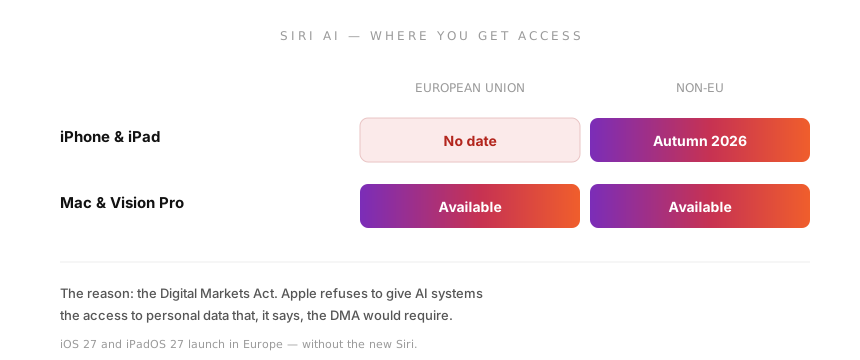
Apple's justification: regulators' interpretation of the Digital Markets Act would, it says, oblige it to give AI systems almost unlimited access to users' personal data, without sufficient safeguards. As Brussels has not accepted the solutions Apple proposed, the company prefers not to ship the feature rather than open that access.
The nuance that matters: the restriction targets iPhone and iPad. Europeans will indeed have Siri AI on macOS 27 and visionOS 27. In other words, the same French user will have the new Siri on their Mac and their Vision Pro, but not on the phone in their pocket. An inconsistency that says everything about the tug-of-war under way.
Should we take the privacy argument at face value? Not entirely. It is both a genuine data-protection argument and a negotiating card: by publicly depriving Europeans of a flagship feature, Apple puts pressure on the Commission and turns the DMA into a visible culprit in the eyes of its own customers. The truth lies between the two, and the absence of a timetable is itself a lever.
It is not the first time — and that is the signal
This tug-of-war has an almost identical precedent. In 2024, when Apple Intelligence launched in the United States, Apple had already withheld these features from the Union, citing the "regulatory uncertainties" of the DMA, in particular its interoperability requirements. The first features only reached Europe in April 2025, after months of negotiation. In other words, what is being replayed in 2026 is not an accident: it is a pattern. The difference, this time, is that there is no timetable — the wait is harder than the last one.
The dispute goes beyond Siri. The Free Software Foundation Europe noted that, of 56 formal interoperability requests filed with Apple under the DMA, none had resulted in a new solution from the company. The friction between Cupertino and Brussels is structural: on one side a regulator that wants to force the opening of ecosystems, on the other a manufacturer whose entire model rests on integrated control of hardware, software and data. AI merely heats this conflict to white heat, because it needs, precisely, to access personal data in order to be useful.
For a French company, the lesson is not anecdotal. If you build your processes on American tools — and most AI tools are — you inherit a risk you do not control: a feature you rely on can be disabled in your country, or postponed indefinitely, for regulatory reasons foreign to your business. Dependence on a foreign supplier is not just a question of price or quality; it is a question of legal availability. It is the most concrete argument today in favour of diversifying towards European or open-source AI building blocks for critical uses.
6. Tim Cook leaves, John Ternus arrives
Beyond the software, the keynote was also a handover, in moving farewells. Tim Cook steps down as Apple's chief executive on 1 September 2026 and becomes executive chairman; John Ternus, 51, senior vice-president of hardware engineering, succeeds him as chief executive. Cook summed up fifteen years of method: "Getting the best products in the world to deliver experiences that enrich people's lives has always been our North Star".
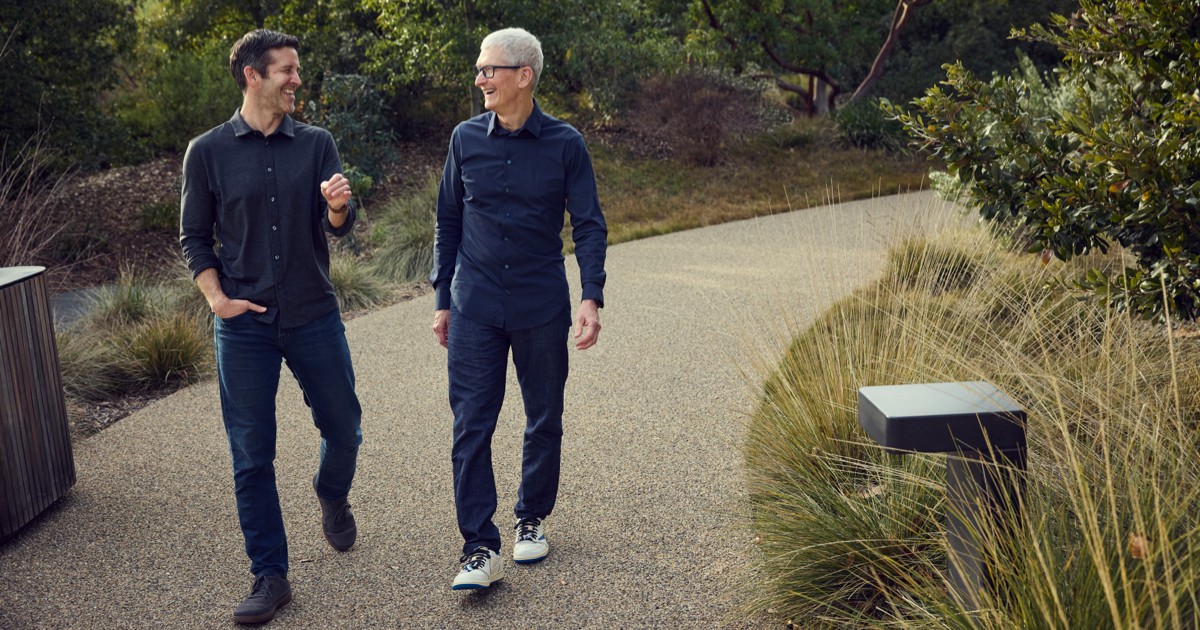
Who is Ternus? A pure in-house product. A mechanical engineer trained at the University of Pennsylvania, he joined Apple in 2001 in the product design team, oversaw the hardware of the iPad and AirPods, then the iPhone from 2020 and the Apple Watch afterwards. Twenty-five years at the company, zero LinkedIn posts: the anti-influencer, an engineer of physical products. That is exactly where the most telling signal of this whole keynote lies.
Apple is changing boss at the precise moment it gives up owning the brain of its assistant and collides head-on with the European regulator. And it chooses a hardware man, not an AI man. The message is consistent with everything else: Apple is doubling down on what it masters — the product, the silicon, the integration — and accepts renting intelligence from Google. Ternus's bet will be whether, in an era when value migrates to software and models, a company run by its hardware engineers can remain the most valuable in the world. Steve Jobs chose an operations man (Cook) to industrialise his vision. Cook chooses a machines man at the moment when the battle is being fought, precisely, somewhere other than in machines.
7. Our reading
Three lessons for anyone following AI beyond the gadget.
One — the model has become a commodity, integration remains rare. When Apple, the best-capitalised company in the world, prefers to rent Gemini rather than train its own, the message is clear for any organisation: your advantage will not be the model you use — everyone will have access to the same ones — but the quality with which you plug it into your data and your real uses. That is exactly the ground where an SMB can win.
Two — the geography of AI is fragmenting. One global product, two rights of access. For a French company that builds its processes on American tools, the Siri case is a warning: a feature you rely on can be disabled in your country overnight, for regulatory reasons that have nothing to do with your business. Dependence on a foreign supplier is not just a question of price, it is a question of availability.
Three — the DMA is producing its first visible effects for the general public. Until now, European regulation was discussed among lawyers. Now tens of millions of Europeans will find, controller in hand, that they do not have the same AI as Americans. The "protection versus innovation" debate leaves the law firms and enters households. Whatever the outcome, it is a precedent.
The new Siri is neither the revolution Apple will sell, nor the non-event some will say. It is the moment when the biggest phone maker admits it is no longer master of the intelligence of its devices — and when Europe discovers that defending its data has a concrete price, paid first by its users. The real subject is not Siri. It is knowing, for your organisation, which AI building blocks you rent, from whom, and what happens the day access changes.
Sources
- Apple Newsroom — "Due to DMA, Siri AI delayed in EU for iOS 27 and iPadOS 27"
- TechCrunch — "WWDC 2026: everything announced on Siri AI, OS 27, Apple Intelligence"
- MacRumors — Siri AI device compatibility
- 9to5Mac — beta waitlist for the new Siri
- Engadget — WWDC 2026 live blog
- BFMTV — OpenAI, Jony Ive and the ChatGPT device
- SF Examiner — OpenAI's purchase of the startup io ($6.4bn)
- Dezeen — Ferrari Luce, first electric car signed by LoveFrom
- Ferrari — official Ferrari Luce page
- 9to5Mac — court sides with iyO against OpenAI over the "io" trademark
- ZDNet — the OpenAI × Ive project thwarted by a legal obstacle
- MacRumors — the OpenAI × Ive device pushed back to 2027
- MacRumors — the first device would be a speaker with a camera
- Le Monde — OpenAI buys Jony Ive's startup for $6.5bn
- Bloomberg — Apple delays the "personalised Siri" (March 2025)
- CNBC — Apple Intelligence delayed in the EU as early as 2024 (DMA)
- Yahoo Finance — the ~$20bn a year paid by Google to Apple
- Video — Ferrari Luce presentation
- Video — full Apple WWDC 2026 keynote
- Historical photos — iMac G3 (Rama / D. Fuchs), iPhone 2007 (A. Reinhold), Jony Ive (Marcus Dawes) — Wikimedia Commons, CC BY-SA. Ferrari Luce © Ferrari S.p.A.