On 30 June 2026, Washington ordered Anthropic to restrict access to its most advanced models. About twenty-four hours later, China's Zhipu released GLM-5.2 as open source, under a free licence, with no regional lock and no conditions of use. The message is clear, and it is signed: "Advanced AI must be open to everyone, not belong to a small group, nor be something that can be switched off at will." After DeepSeek last year, China has its new sensation, and it has just turned an embargo into a commercial argument.
1. A new "DeepSeek moment"
Zhipu, which operates under the Z.ai brand, put GLM-5.2 online on 13 June 2026, then published its weights under an MIT licence. Independent analysts now rank it as the best-performing open-access model on the market, and the first Chinese model to enter the world top three on a major benchmark. In Silicon Valley, several voices have spoken of a second "DeepSeek moment", in reference to the Chinese start-up that shook the sector a year earlier.
The timing is no coincidence. By releasing its model the day after the order issued to Anthropic, Zhipu sets two philosophies directly against each other: on one side, a closed, controlled American AI that can be unplugged by political decision; on the other, an open Chinese AI that can be downloaded and that nobody can withdraw once it is published. The contrast is the product.
2. Open versus closed: two strategies collide
GLM-5.2 offers a context window of one million tokens, tops several open-access coding rankings, and costs a fraction of the price of leading American models. Above all, it is free: open weights, MIT licence, no geographical restriction. Any company, in Europe or elsewhere, can download it, modify it and run it on its own servers.
This is the core of the Chinese strategy. Where the American leaders lock down access to their best models, reserved for approved partners and billed at a premium, Chinese laboratories are flooding the market with open, inexpensive models. The aim is not only technical, it is gravitational: to capture the developers, companies and countries looking for an alternative to Western offerings that are costly and politically unstable.
Sources: Forbes, South China Morning Post.
3. The market has spoken: more than 1,700% in six months
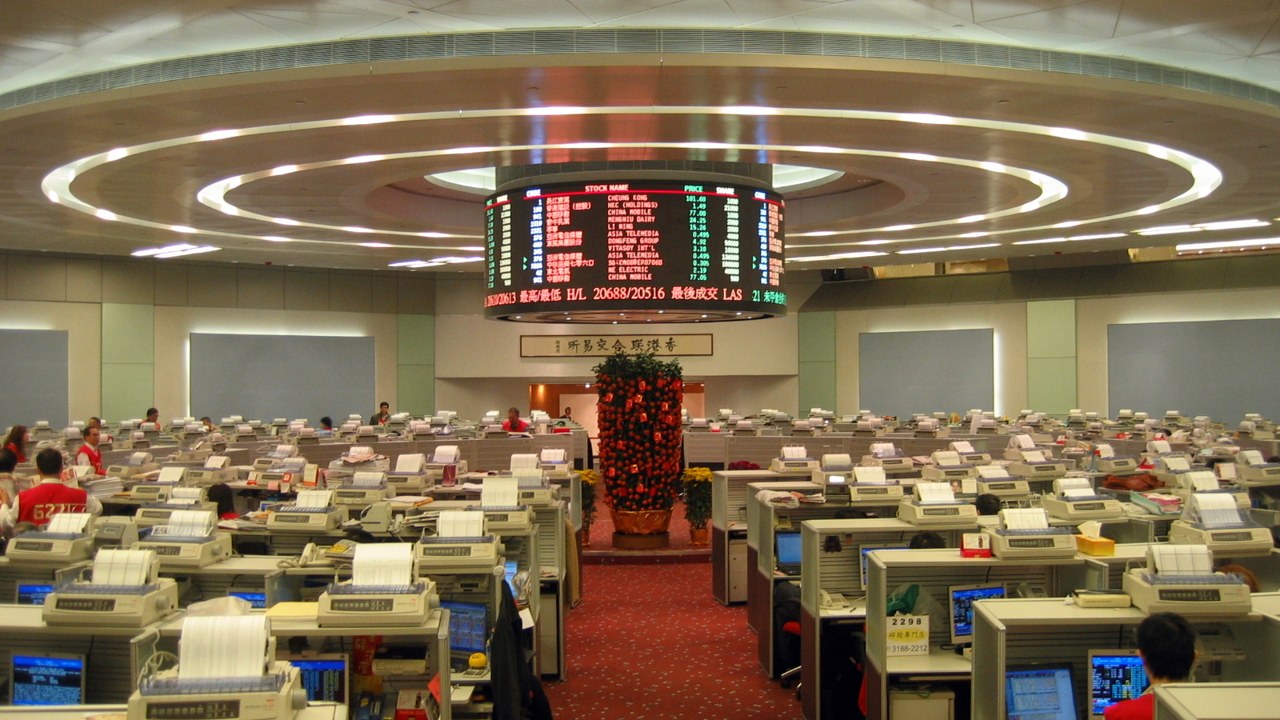
Finance validated the bet before the commentators did. On 8 January 2026, Zhipu became the first large language model company in the world to go public, in Hong Kong (ticker 2513.HK). The IPO, at HK$116.20 a share, raised about HK$4.17 billion and valued the company at around $7 billion. Retail demand exceeded the offer more than a thousand times over.
Six months later, the share price has risen by more than 1,700%, and market capitalisation has passed the HK$1,000 billion mark, or nearly $128 billion. The launch of GLM-5.2 and Anthropic's forced withdrawal from the market fuelled the frenzy. Investors are not betting on a model, but on a shift in the ecosystem.
4. Where Zhipu comes from
Founded in 2019, Zhipu is a commercial spin-off of the Knowledge Engineering Group at Tsinghua University, China's MIT, driven by professors Tang Jie and Li Juanzi. This academic lineage sets it apart from a simple pure player: behind Z.ai stands one of the country's most respected research laboratories, and an openly stated ambition to rival the best in the world.

Source: Yicai Global. Zhipu is a spin-off of Tsinghua's KEG laboratory, founded in 2019.
5. What it changes for the China–US rivalry
Zhipu is not alone. Moonshot's Kimi, Alibaba's Qwen, DeepSeek: the performance gap with American models is narrowing before our eyes, and it is narrowing in open access. The American restriction strategy rested on a wager: keep a technological lead by locking down the best models and the best chips. That wager assumes the lead is durable. It is not.
For a European company, the consequence is concrete. The landscape is no longer limited to a handful of closed, overpriced American models. There is now a family of open, high-performing Chinese models, deployable on your own servers, with no dependence on a supplier that could be forced to cut off your access. This is not a reason to switch blindly, as questions of trust and data governance remain entirely open, but it is a reason to stop reasoning as if frontier AI had only one address.
6. Conclusion
Export controls were meant to contain China. They gave it a narrative, a timetable and an argument: sovereignty through openness. By cutting off Anthropic a day too early, Washington handed Zhipu the best possible launch window, and the rest of the world a live demonstration that the AI frontier is no longer a monopoly.
That leaves the real question, the one the stock market does not settle: an open, free model says nothing about the trust it deserves, or about the intentions of whoever publishes it. The rivalry will soon no longer be about "who has the best model", but about "whom to entrust your infrastructure to". And no embargo will answer that one for you.