Launched on 17 April 2026 by Anthropic Labs, Claude Design was immediately billed as a “Figma and Canva killer”. Four days later, after testing it and analysing feedback from the field, here is what the tool really does, what it does not do, and when it makes sense in your stack.
1. What Claude Design is
Claude Design is a research preview from Anthropic Labs, available to all Claude Pro, Max, Team and Enterprise subscribers (Anthropic source). There is no separate subscription and no direct extra cost: usage draws on your existing Claude quota.
The tool is built on Claude Opus 4.7 and produces four types of deliverable:
- App and website prototypes, clickable and interactive
- Slides and pitch decks, with PPTX or Canva export
- One-pagers, landing pages, social media assets
- Design systems generated from your existing codebase
A technical particularity: Claude Design reads your codebase and your design files to extract your reusable components, then generates screens that respect that visual grammar. It is not generic, it is contextual.
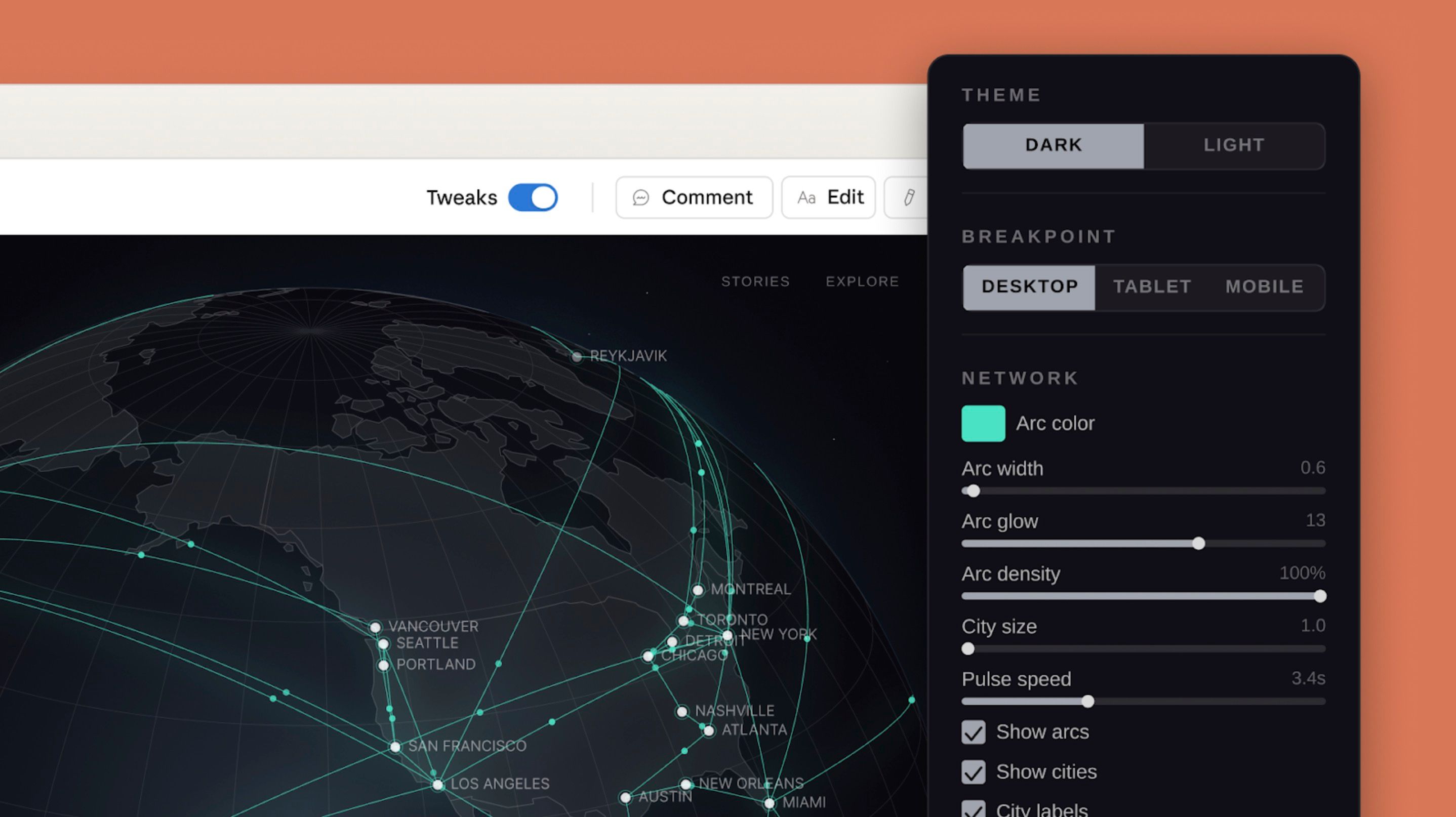
Source: anthropic.com/news/claude-design-anthropic-labs. Chat on the right, spacing/colour sliders in the centre, multi-format export at the bottom.
2. What it does well, and what it does not
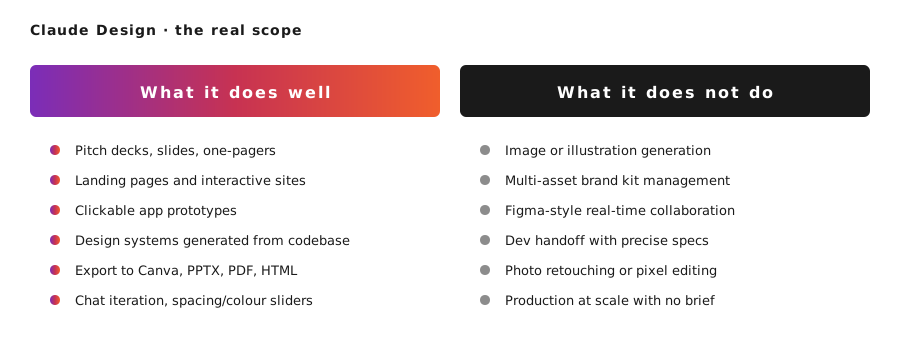
Cross-analysis: The New Stack, VentureBeat, Banani.
The point most often underestimated: Claude Design does not generate images. Give it a photo and it will place it in a layout. Ask it to create an illustration and it sends you to Midjourney or DALL-E. It is a layout machine, not a complete visual generator.
The second structural limit: no lasting brand kit management. If you produce 200 social visuals a month that must follow a strict identity and evolve with it, Canva remains the reference tool.
3. The typical workflow
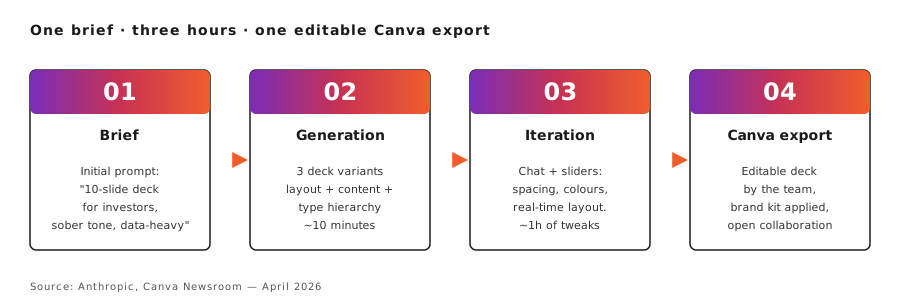
Times observed by users in the research preview (sources: Banani, MindStudio).
The optimal path in April 2026: you brief Claude through chat, it proposes several variants, you iterate with the real-time sliders to adjust spacing, colours and layout without rewriting a prompt, then you export to Canva, where your team takes over for brand finishing and collaboration.
It is this last step that sets Claude Design apart from a plain AI output. The partnership with Canva (Canva Newsroom source) makes the export live and editable by non-designers, which earlier AI generators lacked.
4. An honest comparison
| Criterion | Claude Design | Figma | Canva | Midjourney |
|---|---|---|---|---|
| Main strength | Fast generation from a prompt | Precision, real-time collaboration | Brand kit, volume, templates | Original visual creation |
| Time for a 10-slide deck | 1 to 3 hours | 4 to 8 hours | 2 to 4 hours | N/A (images only) |
| Learning curve | Low (prompt) | High | Medium | Medium (prompt craft) |
| Team collaboration | Canva export required | Native | Native | No |
| Image / illustration | No | Import only | Library + import | Yes, original |
| Design system from code | Yes, native | Manual | No | No |
| Price | Included in Claude Pro $20/month+ | Free to $45/user/month | Free to $15/month | $10 to $120/month |
The positioning becomes clear: Claude Design does not replace Figma for a team of designers delivering precise specs to their developers. It replaces Canva or Figma for a solo founder who wants a clean deck in three hours. And it pairs with Midjourney to cover the need for original illustrations.
5. Who it is worth it for
Three profiles for whom Claude Design makes a real difference.
The founder / manager who needs a visual deliverable fast. An investor deck on Friday, a landing page for an announcement on Monday, a one-pager for a client meeting. You have no designer and no time to learn Figma. Claude Design fits.
The product manager sketching flows. You want to validate an interface idea before bringing on a designer and two developers. Claude Design generates a clickable prototype that you can show in a product review to settle the architecture.
The dev team with no dedicated designer. Your codebase has a visual grammar that nobody has formalised. Claude Design reads it, infers a design system from it, and generates the missing screens consistently.
6. Who it is not for
Product teams with structured design ops: stay on Figma. Real-time collaboration, maintained component libraries and handoff with precise specs are not Claude Design's territory.
Social media managers producing 200 on-brand visuals a month: Canva remains better. The persistent brand kit, automatic format variations and template library are strengths that Claude Design does not replicate.
Creative studios that need bespoke images: Midjourney, DALL-E, Nano Banana Pro or Flux remain indispensable. Claude Design orchestrates, it does not create.
7. Limits worth flagging
Quota consumption. Each generation draws on your Claude Opus 4.7 budget. A 10-slide deck with 3 variants and 10 slider iterations can burn a significant share of the monthly Pro quota. For heavy use, a Max or Team plan is advisable.
Variable quality on Canva exports. Feedback from research-preview users reports formatting losses between Claude Design and Canva on some complex layouts. HTML and PPTX export is more reliable.
Dependence on Anthropic. Like any Anthropic product, access depends on the stability of the API and the terms of use. For a mission-critical production workflow, plan a plan B.
Conclusion
Claude Design is not “the end of Figma”. The headlines that announced it as such missed its real positioning. The tool moves the boundary of what is possible for those who have no designer, no time and no wish to learn Figma. It puts into the hands of founders and product managers a level of deliverable that previously required 8 to 16 hours of a designer's work.
For a team that does design for a living, nothing changes structurally. For everyone else — the vast majority of SMBs, startups and product teams without dedicated design resources — the question is no longer “do we need Claude Design” but “when do we build it into our stack, and for which deliverables”.
A pragmatic answer: this very week, on your next internal deck, to see what it gives on your own use case. The cost is already paid if you have a Claude subscription.