The AI image and video model market counts thirty-one players in April 2026. Seven days after the release of ChatGPT Images 2.0 (21 April 2026), OpenAI shut down the consumer Sora application on 26 April 2026, with the API remaining available until 24 September 2026. Runway raised $315M in February to pivot towards world models. Black Forest Labs held the top of the Image Arena leaderboard for six months before GPT Image 2 overtook it by 242 points on 21 April. China produces 2K multi-shot at $0.14 a second via Seedance 2.0. The EU AI Act imposes machine-readable watermarking on any AI output from 2 November 2026.
Choosing a model amounts to choosing a stack and an economic model. Price gaps range from $0.03 per image to $200 a month in subscription, quality gaps vary with benchmarks and use cases, and half of product announcements date from less than ninety days ago.
This article documents the thirty-one selected models with their official prices verified in April 2026, their technical differentiators and their real limits. It presents the films, ads and music videos already produced with these tools. A dedicated section analyses Black Forest Labs, the only credible European frontier player in image generation. Two bonuses cover AI agents in video conferencing via Pika-Skills and UGC production with Seedance 2.0 and Higgsfield. The last section covers the 2026-2027 roadmap (Veo 4, Genie 3, world models) and EU AI Act compliance.
Timeline 2024-2026
Productions published with these models
Three recent productions document the operational state of the art: a short film awarded at a festival, a comparative test run by a general-interest newsroom, a hackathon finalist. Official sources only.
Total Pixel Space — Grand Prix of the Runway AI Film Festival 2025
Short film by Jacob Adler, Grand Prix of the 3rd edition of the Runway AI Film Festival (May 2025). Production made entirely with Runway Gen-3 and Gen-4. The festival totals a $1M prize pool across three editions and 6,000 submissions in 2025.
Wall Street Journal comparative test — Google Veo vs Runway
Joanna Stern (Wall Street Journal) documents the end-to-end production of a mini-film with Google Veo and Runway in parallel. Public methodology: number of prompts, iteration time, breaking points between the two models.
Feast — Runway Gen:48 finalist (4th edition)
Short film Feast, finalist of the 4th edition of Runway Gen:48, a 48-hour production challenge. The Gen:48 format requires delivering a complete film (script, generation, editing, sound) over two calendar days.
Other productions released as reference points:
- Toys R Us, The Origin Story (June 2024) — advertising spot produced by Native Foreign with OpenAI Sora. The first campaign by a mainstream brand openly made entirely with AI.
- Coca-Cola, Holidays Are Coming 2024 (November 2024) — AI recomposition of the iconic 1995 spot, distributed worldwide.
- Critterz (Toonstar / Niantic) — animated feature in pre-production with Sora integrated into the storyboard and pre-vis pipeline.
- AI festival ecosystem — Runway AI Film Festival (3 editions), AI Film Festival Japan, World AI Film Festival, OpenAI Sora Selects.
1. Summary table — the 31 models
Three categories: 15 image models, 15 video models, 1 orchestrator. The tier (S/A/B) reflects market position in April 2026, not absolute quality: an S model dominates its category on a key use, an A does the job, a B is viable depending on context.
| Model | Origin | Tier | Entry price | Differentiator | Limit |
|---|---|---|---|---|---|
| — Image — | |||||
| GPT Image 2 | OpenAI · US | S | $20/month (ChatGPT Plus) | Layout reasoning, multi-image editing, #1 Image Arena | Thinking mode reserved for paying users |
| Nano Banana Pro | Google DeepMind · US | S | €22/month (Gemini Advanced) | Native Gemini 3 reasoning, 14-image multi-reference, 4K output, SynthID | Strict Google moderation on faces and brands |
| Midjourney V7 | Midjourney · US | S | $10/month | Best aesthetics on the market, V8 Alpha released | No official API |
| FLUX.2 [pro] | BFL · Germany | S | $0.03/image | 10-image multi-reference, open-source 32B dev | No consumer app |
| Stable Diffusion 3.5 | Stability · UK/US | A | Open-source / $10 for 1,000 credits | Large-scale open-source, ComfyUI ecosystem | Raw quality below the leaders |
| Playground v3 | Playground · US | B | $15/month | Graphic design, layer-based editing, ~1,800 fonts | No open API |
| Kolors 2.1 | Kuaishou · China | A | $10/month (via Kling) | Native Chinese and English text rendering | API pricing not listed, Chinese censorship |
| Ideogram 3.0 | Ideogram · Canada | A | $7/month | Text rendering ~90-95% accuracy | Photorealism below the leaders |
| Adobe Firefly Image 5 | Adobe · US | A | $9.99/month | Commercial-safe, IP indemnification, Photoshop integration | Closed Adobe ecosystem |
| Recraft V3 | Recraft · US/UK | A | $12/month | Native scalable vector SVG, brand kits | Graphic design niche |
| Leonardo Phoenix 1.0 | Leonardo · Australia | B | $12/month | Strict prompt adherence, Flow State mode | Less purely photorealistic |
| Google Imagen 4 | Google · US | A | $0.02/image (Fast) | 2K, built-in SynthID watermark | Strict Google moderation |
| Reve Image 1.0 | Reve · US | B | ~$0.01/image | Strong text rendering, top of leaderboard on release | Little-known team, limited editing capabilities |
| Krea 1 | Krea AI · US | A | $9/month | Realtime Canvas <50 ms, 64+ aggregated models | Aggregator dilutes the proprietary model |
| Bria FIBO | Bria AI · Israel/US | A | Custom enterprise | Deterministic JSON reproducibility, IP indemnif. | Out of reach for freelancers |
| — Video — | |||||
| Sora 2 | OpenAI · US | S | $0.10/sec (API) | Synchronised native audio | App shut down 26 April 2026 |
| Runway Gen-4.5 | Runway · US | S | $15/month | #1 Video Arena, granular camera control | Credits quickly consumed on Gen-4.5 1080p |
| Veo 3.1 / Lite | Google · US | S | $0.05/sec (Lite 720p) | Native audio, 4K, Scene Extension > 60 s | Strict moderation on faces/brands |
| Kling 3.0 | Kuaishou · China | A | $10/month | Joint audio-video (2.6+), Multi-Elements | Chinese censorship, credit price balloons in HD |
| Seedance 2.0 | ByteDance · China | S | $0.14/sec | Multi-shot 2K in one prompt, multimodal | Chinese regulation, young ecosystem in the West |
| Vidu Q3 | Shengshu · China | A | $0.07/sec | Reference-to-video, lowest price on the market | Quality below the leaders in independent tests |
| Pika 2.5 | Pika · US | B | $10/month | Pikadditions, Pikaffects, Pikaframes | Social-oriented, short durations |
| Higgsfield Cinema 3.0 | Higgsfield · US | A | $15/month | Multi-model wrapper, optical physics | No proprietary model |
| HeyGen | HeyGen · US | S | $29/month | Diffusion-based Avatar IV, 175+ languages | Repetitive stock avatars without Custom |
| Synthesia 3.0 | Synthesia · UK | S | $29/month | Express-2 full-body avatars + gestures | Free 10 min watermarked useless professionally |
| Hailuo 02 / 2.3 | MiniMax · China | A | ~$10-15/month | NCR architecture +2.5x efficiency | No native audio, content restrictions |
| Luma Ray2 / Ray3 | Luma · US | A | $30/month | Start+end keyframes, up to 60 sec | Plus carries a watermark if non-commercial |
| PixVerse V6 | PixVerse · China | B | Free + paid | End frame control, 100M+ users | Less powerful cinematically |
| Wan 2.7 | Alibaba · China | A | $0.10/sec (fal/Together) | First-and-last-frame, video-to-video | Open-source not confirmed for 2.7 |
| Tavus CVI / Raven-1 | Tavus · US | S | $59/month (Starter) | 600 ms round-trip with full vision | Credits balloon quickly outside Starter |
| D-ID Agents 2.0 | D-ID · Israel | A | $5.90/month (Lite) | Agentic Videos, Natural User Interface | Lite with watermark, pricing complexity |
2. 15 image models under the microscope
For each model, the same protocol: origin, latest verified version, official prices in April 2026, what really sets it apart, its least-discussed limit. When an isolable official video exists on YouTube, it is embedded; otherwise we say so.
Not to be confused — Claude Design. Anthropic offers a tool called Claude Design that produces interface mock-ups (UI, design systems, web and app mock-ups). It is not an image-generation model in the sense of this article. It renders interface design, not photo, illustration or marketing visuals. For a dedicated analysis, see our review: What is Claude Design really worth?









Official videos available — Image
Ideogram 3.0 — official introduction video.
Google Imagen 4 — official Google video on Imagen 4 in Gemini.
Leonardo Phoenix 1.0 — Behind Phoenix interview with Aninda Saha.
Bria FIBO — official presentation video.
3. 16 video models under the microscope
In video, the market splits into four families: cinematic generators (Sora 2, Runway, Veo, Kling, Seedance), conversational avatars (HeyGen, Synthesia, Tavus, D-ID), social products (Pika, PixVerse, Hailuo) and orchestrators (Higgsfield). Sora 2 technically remains the audio-video benchmark, but its consumer app was shut down on 26 April 2026.


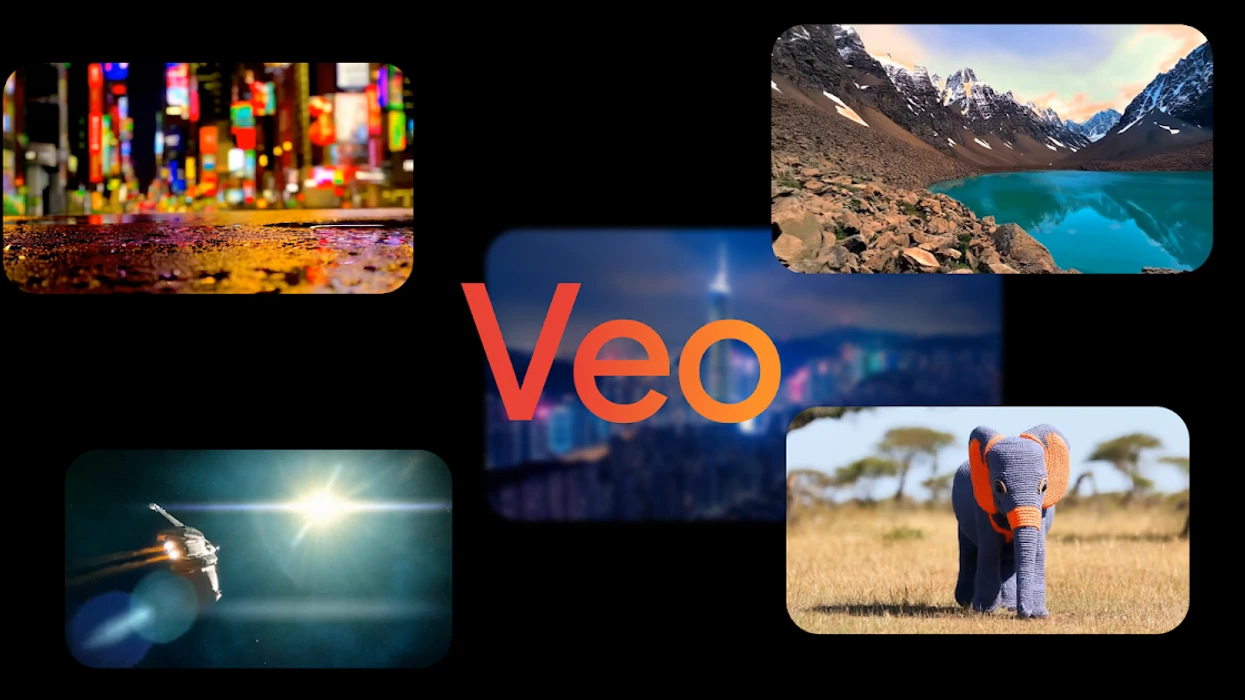










Official videos available — Video
Runway Gen-4 — official introduction video.
Luma Ray2 — official introduction video.
Tavus Raven-1 — official launch video.
4. Black Forest Labs: technical success, commercial success still to be proven
Europe has a single frontier player in image generation in April 2026, and it is Black Forest Labs. The founders are Robin Rombach, Andreas Blattmann and Patrick Esser. They co-created Stable Diffusion at Stability AI before leaving to found BFL in Germany in 2024. The context matters: they left as Stability AI was collapsing financially, and they chose an opt-in API + open-source "klein" model that guarantees them both revenue and community legitimacy.
The technical success is real
- $300M Series B announced in December 2025, led by General Catalyst with a16z, Mubadala, Disney, MGX. This raise values BFL among the best-capitalised AI players in Europe.
- FLUX.2 [pro] released on 25 November 2025, followed by [max] on 15 December, [flash] edit on 23 December. Four official variants: pro, flex, dev, klein (32B params, open-source).
- #1 on Image Arena from November 2025 until 21 April 2026. Position lost that day when OpenAI released GPT Image 2, which took the lead with a +242-point gap.
- Massive distribution: official BFL API, Together AI, fal, Replicate, Vercel AI Gateway, OpenRouter, Azure AI Foundry, AWS Bedrock. FLUX.2 [dev] open-source on Hugging Face.
- Technical differentiation maintained: multi-reference up to 10 images, 4MP editing, 92% text-rendering accuracy. The only frontier player to offer a production-ready 32B model in open-source.
The commercial success remains to be proven
Honestly, this is where the situation is fragile. BFL has no consumer app — no consumer site like midjourney.com, no mobile app. The model is distributed through integrators, which means the value captured is shared with Replicate, fal, Vercel, AWS. Revenues are not public. Losing #1 on Image Arena on 21 April, six months after reaching it, shows that technical leadership is never secured in this industry.
The Stability AI precedent hangs over the file. Same founding team, same open-source strategy of "viral model, API monetisation", and yet Stability AI ended up near-bankrupt in 2024. The difference this time: BFL arrived with a higher-quality model from the start (FLUX.1 [pro] was already competitive with Midjourney V6), a raise in advance, and a clear enterprise/developer focus. But the absence of a consumer app leaves the margins to OpenAI (ChatGPT) and Midjourney.
Factual verdict. BFL is the only credible European frontier player in image generation in April 2026. The technical success is unequivocal. The commercial success is under construction and remains fragile: no consumer app, non-public revenues, Image Arena leadership lost after 6 months. If you are building a product in France or Europe and want a frontier image model without depending on OpenAI, FLUX.2 is today your best option. With lucidity.
5. Scheduling video calls with your AI agents via Pika-Skills
Pika Labs maintains an open-source repo less well known than the main tools but one that changes the game for anyone who wants to bring an AI agent into a video meeting: github.com/Pika-Labs/Pika-Skills. The repo shows 1,100 stars and 168 forks in April 2026.
The key skill is called pikastream-video-meeting. It lets an AI agent — driven by Claude Code, OpenClaw, or any compatible orchestrator — join a Google Meet or Zoom as a real-time video avatar, with voice cloning, conversation memory, and a personality that persists between calls.
Minimal setup
- Pika Developer account + API key in the
dk_...format - Claude Code or OpenClaw installed (both support the Skills protocol)
- Voice clone recorded (~10 seconds of audio is enough)
- Avatar generation via OpenAI image (Instant mode will do) or a real photo
Technical operation
- 24 FPS video stream at 480p, ~1.5 sec speech-to-video latency on 1 H100 GPU
- Price: $0.275/min according to the official repo. Some web sources mention $0.20/min — discrepancy unresolved to date, to be checked at deployment
- Automatic billing via the Pika Developer dashboard
- Post-meeting notes: transcription + summary + actions extracted automatically
Concrete use cases
- Enriched note-taking. The agent stays silent, listens, takes notes structured by topic and sends a report after the meeting.
- Qualifying inbound calls. For a sales team: the agent qualifies a discovery call against a predefined grid, scoring directly in the CRM after the call.
- Post-call sales coaching. The agent replays the key moments, identifies the objections handled or missed, suggests rewordings.
- Internal training. The agent plays a fictional customer on a specific case to train a salesperson or a customer service rep.
Official Pika Labs video on PikaStream 1.0 Beta:
Bonus 26. On-demand UGC with Seedance 2.0 and Higgsfield
UGC (user-generated content) refers to face-to-camera videos in a testimonial or product-demo style. An extremely effective format in social ads because it looks "authentic" (not shot in a studio, not visually scripted). Problem: shooting clean UGC is expensive (actors, location, multiple takes).
In April 2026, two tools solve much of the problem — with an important ethical caveat to respect.
Seedance 2.0: multi-shot UGC in one prompt
Seedance 2.0 is arguably the most convincing model for face-to-camera UGC in April 2026. Three reasons:
- 2K multi-shot in a single prompt. A single prompt generates several coherent shots (e.g. wide shot + close-up + product insert) with the same character.
- Native lip-sync. No need for a separate voice → video pipeline: the model synthesises dialogue + lips + body in one pass.
- Real cost. $0.14/sec via the official API, down to $0.05 per 5-sec 720p video via third parties. At that price, a campaign of 30 10-sec videos costs ~$40 in compute.
Concrete demonstration — Seedance 2.0 generates a complete UGC ad in one prompt:
Higgsfield Cinema Studio 3.0: UGC look with optical physics
Higgsfield Cinema Studio 3.0 (released on 1 April 2026) adds a layer that Seedance lacks: real optical-physics simulation. You choose a lens type (35 mm, 50 mm, telephoto), a focal length, an aperture. The video render follows. This is what turns an AI UGC of the "student filming with their phone" kind into an AI UGC of the "pro creator with a clean setup" kind.
Higgsfield remains a wrapper: it calls Seedance 2.0, Veo 3.1, Kling 3.0, Sora 2 or Wan 2.7 depending on your choice. Price: Starter $15/month, Plus $39/month, Ultra $99/month. The underlying Seedance or Veo cost still has to be paid on top.
Higgsfield UGC studio demonstration with optical physics:
Ethical caveat
Transparency required. An AI-generated UGC video passing itself off as an authentic human testimonial poses an immediate ethical problem. The standard practice in 2026 is to display an "AI-generated video" or "scenario inspired by real cases" notice, and never to use the face of a real person without consent.
EU AI Act compliance. From 2 November 2026, machine-readable watermarking becomes mandatory on any AI output in the EU. Sora 2, Veo 3.1 (SynthID), Adobe Firefly (C2PA) already integrate these standards. If your AI UGC is distributed in the EU after that date, the watermark must be present and detectable. Penalties of up to €15M or 3% of worldwide turnover.
7. What's coming — 2026-2027
Beyond current products, here is what is officially announced or solidly telegraphed for the next 12 months.
Veo 4 (Google DeepMind)
Official teaser published in late March 2026 by Google DeepMind, with several press sources confirming Google I/O 2026 (May 2026) as the release window. Announced characteristics: generation of up to 30 seconds in one pass, native 4K output, multi-shot storyboard, reinforced character consistency, zero-shot avatar creation, multimodal inputs (text, image, audio, storyboard). Reliability level: official announcement.
Sora app shut down and OpenAI's pivot to world simulation
On 24 March 2026, OpenAI announced the end of the Sora brand. Consumer app shut down on 26 April 2026, sora-2 API discontinued on 24 September 2026. No consumer Sora 3 in preparation. OpenAI's video R&D is officially pivoted towards "world simulation" for robotics and physical simulation. Reliability level: official OpenAI announcement.
Genie 3 (DeepMind) — the world model is here
Genie 3 was launched on 29 January 2026 in limited public access (US Ultra subscribers). It is a real-time interactive world model: 24 FPS, 720p, free navigation in a generated environment, coherence over a few minutes. Not a video generator: a navigable simulator. It is the first consumer product to materialise the shift "from linear video to interactive world". Reliability level: in production.
Runway $315M Series E — pivot to world models
Runway raised a $315M Series E in February 2026, explicitly earmarked for developing next-gen world models. No named "Gen-5". The internal model is called GWM-1 (General World Model). Stated targets: avatars, robotics, simulation, health, climate. Reliability level: official roadmap, timeline unconfirmed.
Midjourney V8 Alpha (then V9)
V8 Alpha released on 17 March 2026. V8.1 Alpha on 14 April 2026. Published characteristics: native 2K rendering via --hd, 5x speed vs V7, accurate text rendering (text in quotation marks), new PyTorch codebase on GPU (vs TPUs). V9 absent from public Office Hours. Reliability level: V8.1 officially in alpha.
Adobe Firefly NAB 2026
NAB 2026 (April 2026) Adobe keynote: conversational Firefly AI Assistant, hybrid timeline + text web Video Editor, 4K upscale, custom models. Firefly becomes a multi-model orchestrator (30+ integrated models including Veo 3.1, Nano Banana 2, Runway Gen-4.5, Ray3, FLUX.2, Kling 3.0). Reliability level: officially announced.
Vidu / Shengshu — Alibaba $290M investment
On 10 April 2026, Alibaba invested $290M in Shengshu (Vidu) to accelerate the World Generation Model (WGM) and the World Action Model (WAM). Public strategy: a "general world model" linking digital (Vidu) and physical (autonomous driving, robotics). No named Vidu Q4 version. Reliability level: official roadmap, funding confirmed.
Underlying trend: video generators → interactive world models
This is the most important shift of the year. "AI video" in the 2024-2025 sense (a linear clip of 5 to 30 sec) ceases to be the final form. The target form becomes the navigable world generated in real time: Genie 3 at Google, GWM-1 at Runway, WGM/WAM at Shengshu. This shift has three immediate consequences:
- Robotics. An industrial robot needs a navigable simulator for training, not a video clip. The giants are pivoting there.
- Generative video games. Genie 3 already holds 24 FPS over a few minutes at 720p. The first AI game prototypes are arriving.
- Autonomous driving. Shengshu's WGM/WAM explicitly targets simulation for autonomous vehicles. Alibaba is investing in this direction.
Reasoning models for image and video
GPT Image 2 (April 2026) inaugurates Thinking mode: web search, multi-step planning, self-verification before generation. Nano Banana Pro integrates Gemini 3 reasoning. Luma's Ray3 presents itself as the "first reasoning video model". Image and video are becoming outputs of agents, not simple diffusion outputs.
Open-source catches up (and breaks prices)
FLUX.2 [klein] (32B params) and Alibaba's Wan 2.7 rival proprietary models on public benchmarks. ByteDance's Seedance 2.0 and Kling 3.0 break prices relative to Sora and Veo. The quality/price ratio is tipping towards Chinese and European open-source. Direct implication: for production use, the marginal cost of a second of AI video has been falling ~50% a year since 2024.
EU AI Act — deadline 2 November 2026
Mandatory machine-readable watermarking on any AI output (image, video, audio, text). Penalties of up to €15M or 3% of worldwide turnover. Code of Practice finalised May-June 2026. OpenAI, Google (SynthID), Adobe (C2PA) and Midjourney already integrate provenance standards. If you distribute AI content in the EU after that date, the issue is no longer "should we watermark" but "does our watermark pass an auditor's tests".
Conclusion
Not a single model does everything in April 2026. That is probably even the most important conclusion: the mental trap of looking for "the best AI model" no longer exists. There are models that dominate a category for 6 months, that give up their place, that specialise. Operational strength no longer comes from choosing one model but from combining several.
Concretely, in production, here is what works: FLUX.2 or GPT Image 2 for volume images, Midjourney for brand aesthetics, Veo 3.1 Lite or Seedance 2.0 for short video, HeyGen or Synthesia for talking-head avatars, Tavus for real-time conversational, Higgsfield or Krea to orchestrate several models downstream, n8n or Claude Code to automate the whole thing. All interchangeable, all replaceable the day a new model comes out.
Anticipating the shift towards interactive world models means anticipating that "AI video" in the sense of a linear clip will no longer be the dominant format in 2027. When Google DeepMind, Runway and Alibaba all aim at the same spot, it is not a weak signal. Recognising that this market is in permanent motion means ceasing to look for "the definitive solution": there will not be one, and that is perfectly fine.
The only discipline that holds in 2026 is the discipline of effective agnosticism. Your workflows must be able to change underlying model with one environment variable. 26 April proved that even Sora could disappear. 21 April proved that even FLUX.2 could lose #1. Build accordingly.