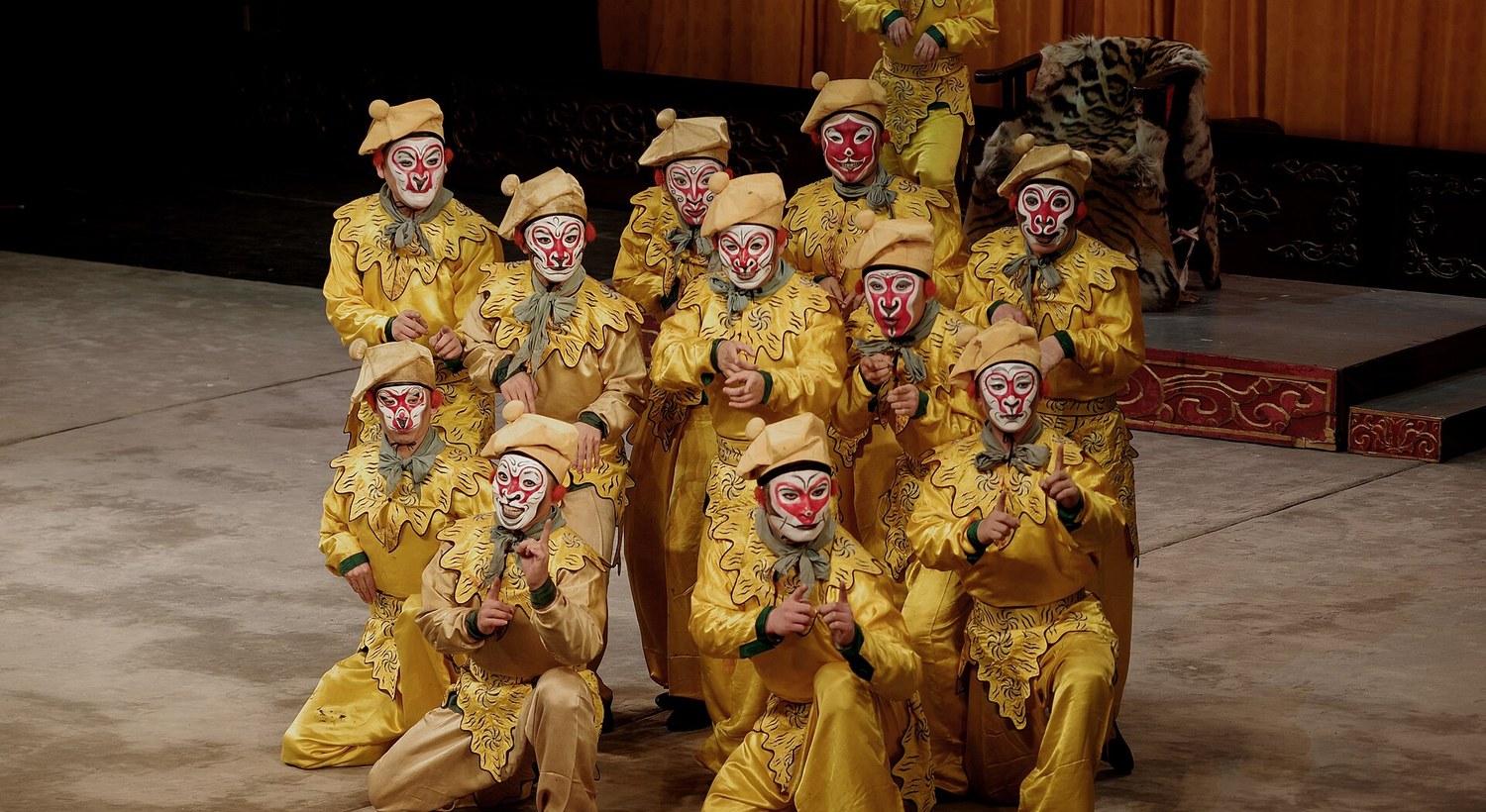
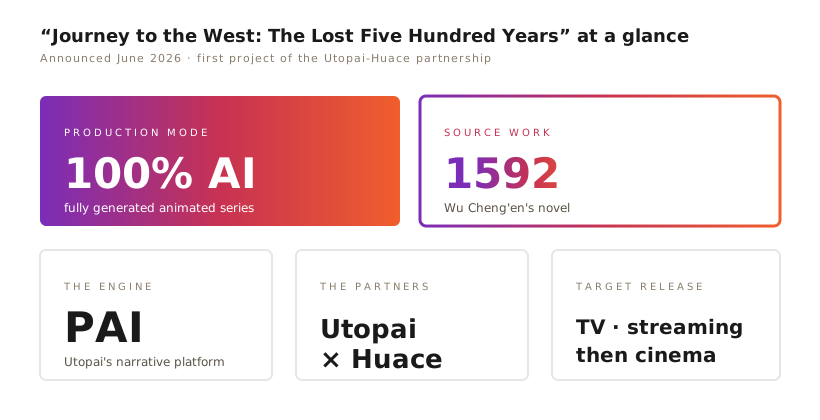
One of the four great classic novels of Chinese literature is about to become an animated series generated entirely by artificial intelligence. The studio Utopai and the Chinese production company Huace announced in June 2026 "Journey to the West: The Lost Five Hundred Years", an adaptation of Journey to the West — the 1592 novel that gave us the Monkey King, Sun Wukong. The series is produced on PAI, Utopai's storytelling platform, and is aimed at television, streaming and then cinema. It is one of the first projects to claim 100% AI production on a format this long and a heritage this weighty. Beyond the announcement effect, it says something specific about the next battle in the creative industry.
1. What has been announced
The project is the first of a strategic partnership between Utopai and Huace. Huace produces the series with Utopai's PAI platform; Utopai retains distribution rights outside China. The first season is conceived as an animated series for TV, streaming and digital distribution, with a franchise intended to extend to cinema afterwards. Cecilia Shen, co-founder and executive of Utopai, describes "a bold reinterpretation of the story, starting from Sun Wukong's untold emotional origin". Binxing Fu, head of Huace, stresses the intention to "preserve the cultural depth" of the work.
2. Why this work and not another
The choice is far from trivial. Journey to the West is a pillar of Chinese heritage, adapted hundreds of times for opera, television serials, films and video games. The series takes the angle of Sun Wukong's previously untold origin: how this rebellious trickster, an immortal warrior imprisoned for five hundred years under a mountain, ends up as the protector of a monk he has never met. Pinning a world-first technological achievement to such a well-known work buys instant recognition — and a minefield, because the audience knows the material by heart and will judge without indulgence.
3. The real break: the marginal cost of production
If the promise holds, the stakes are not artistic but economic. Producing a premium animated series costs tens of millions and mobilises hundreds of people over several years. An AI-assisted production chain aims to compress that cost and that timeline by an order of magnitude. For a studio, this changes the very nature of the bet: you can test a universe, a season, a format, without committing the budget of a feature film. For holders of heritage catalogues — and China has a great many — it opens the prospect of industrialising the exploitation of their licences.
It is also a signal of cultural sovereignty. A Chinese work, produced by a Chinese company, on a technology chain designed to export the story beyond China: the same underlying movement as the one described in our analysis of the Chinese AI infrastructure plan. AI is not just a cost tool, it is a lever of influence.
4. Areas of vigilance
An announcement, not an episode. At the time of the announcement, nothing has been broadcast, no date is set, and no validated final image has been shown to the general public. "100% AI" is a marketing claim until the output can be judged. The promise of continuity and consistency over hours of programming remains exactly what nobody has yet delivered at this level.
The debate over jobs. A "fully generated" production squarely raises the question of the place of animators, illustrators, voice actors and composers. The formula appeals to financiers; it worries a profession that has already protested, in Hollywood and elsewhere, against the unregulated use of AI. A studio that commits to this path must own the issue, not sidestep it.
The question of rights and training. A sixteenth-century work is in the public domain, but the models that put it into images were trained on corpora whose origin is not always documented. This is the sensitive legal point of any AI production: the provenance of the training data.
5. Our reading
This announcement is not a gimmick. It marks the moment when AI video generation leaves the demo clip behind and aims for the long, narrative, heritage format — the heart of the entertainment industry. That this first big bet is Chinese is no accident: it combines an immense heritage, a colossal domestic market and an openly declared drive for technological autonomy.
For an executive or a creative, two conclusions. One: the cost of entry for producing quality animated content is going to collapse, opening up uses (brand, education, niche fiction) that were previously out of budget. Two: value shifts towards what AI does not generate on its own — intellectual property, art direction, taste, and the relationship with the audience. The machine makes the images; it does not decide which ones deserve to exist. This is exactly the same shift in value as in the tie-up between Google and the studio A24.
To place this movement within Chinese technology strategy, see China's national AI network: 295 billion to break away from American chips.