The previous week redrew the map of power; this one redraws the map of price. In a few days, Washington switched back on Anthropic's most powerful model, a "mid-range" model doubled the flagship at half the price, the cost of tokens plunged under Chinese pressure, the bank of central banks put a word on the prevailing anxiety — bubble — and Meta had a machine read thoughts, without so much as a scalpel. Here is the week of 30 June to 3 July 2026, in full, and only what is new.
1. Models & access: the embargo is lifted
This is the epilogue to an unprecedented standoff. On 30 June, the US Department of Commerce lifted the export controls imposed on 12 June on Claude Fable 5 and Mythos 5. Anthropic restored worldwide access to Fable 5 from 1 July, and reactivated Mythos 5 for selected American organisations. In exchange, the company undertakes to hunt down security flaws itself, to coordinate its future launches with the State and to report any malicious use. We told the "inrush of demand" side of this embargo in the Asian clones of Mythos: the loop closes, but the precedent remains — a frontier model is now an asset whose access is negotiated.
Immediately afterwards, Anthropic launched Claude Sonnet 5. The striking fact is not the raw power, it is the price/performance ratio: Sonnet 5 beats Opus 4.8 on the GDPval-AA v2 knowledge-work benchmark (1,618 against 1,615), a first for a "mid-range" model, at a price half as high — $2 per million input tokens and 10 for output, against 5 and 25 for Opus. Designed for agents (planning, using browsers and terminals, running autonomously), it becomes the default model for the free and Pro plans.
2. The race to the lowest cost
The real story of the week is economic. A J.P. Morgan report estimates that Chinese models (Qwen, DeepSeek, Kimi) cost up to 50 times less per token than their American equivalents. The nuance deserves to be stated, and we state it: this "50 times" often compares the Chinese entry level with the American premium — the real gap, at comparable capability, is closer to a ratio of one to five. It remains massive. As a result, Chinese providers already accounted for nearly half of the traffic on inference platforms.
On the hardware side, the demonstration came from Meituan, which trained LongCat-2.0, a model of 1,600 billion parameters, without a single Nvidia chip. The signal goes beyond the technical feat: American restrictions no longer prevent the training of very large models. When capability becomes commonplace and the price collapses, value stops being in the model itself and moves to the use made of it.
- OpenAI has reportedly halved the inference cost of ChatGPT. According to The Information, the number of GPUs mobilised has at times fallen to a few hundred — better margins, and one more argument for those who doubt the sums swallowed up. Not confirmed by OpenAI.
- DeepSeek speeds up inference by 60 to 85%. Its DSpark method does not generate more draft tokens: it intelligently chooses which ones to verify, to avoid wasted work.
- Microsoft optimises agent skills like parameters. With SkillOpt, an agent's instructions adjust automatically without touching the model's weights, and the skills learned transfer from one model to another.
- An AI beats the human record on cryptographic circuits. On the zkGolf competition, Claude Opus 4.7 produced a SHA-256 circuit more efficient than the best hand-optimised one, and spots its own errors — AI surpasses human expertise on very specialised optimisation tasks.
3. Infrastructure, money & bubble
- Blackstone puts $30 billion into data centres in Japan. Capital continues to flow towards the physical building block of AI, this time in Asia, in a capacity race that shows no sign of weakening.
- The BIS says the unwelcome word: bubble. In its annual report, the Bank for International Settlements warns: more than $1,000 billion of AI infrastructure spending over 2025-2026, beyond cash flows, financed by debt and poorly disclosed "circular" arrangements — the same asset sometimes pledged several times. If returns disappoint, the stress could move from tech to credit.
- Zurich, the secret hub of AI R&D. Apple, Anthropic, Google, Meta, Microsoft, Nvidia and OpenAI all have a research centre in a city of 400,000 inhabitants — Switzerland invests 60% of its venture capital in deep tech.
- Amazon ready to launch Leo, its satellite internet. Enough satellites deployed for a commercial launch in 2026, against Starlink's more than 10,000 — connectivity is also becoming a battlefield for giants.
The common thread is the same as that of the cost that trickles down to the general public: AI is a heavy industry, and its physical bill is becoming a financial subject in its own right.
4. AI enters the laboratory

Anthropic unveiled Claude Science, presented at the same strategic level as Claude Code and Claude Cowork. The tool brings together in a single environment the writing of code, its execution on compute clusters and access to more than 60 scientific databases and tools; from high-level instructions, it carries out work autonomously, with a focus on computational biology and drug discovery. Available to all paying subscribers, it will also be used by Anthropic for its own research on rare diseases. It is a direct offensive on the ground where Google DeepMind had reigned for ten years — all the more so since Anthropic has just recruited the brains needed there.
5. Image, video, voice
- Google draws Nano Banana 2 Lite. An image in 4 seconds for $0.034, paired with Gemini Omni Flash, which brings video generation and editing from a simple text prompt to the API for the first time. The lab recommends chaining the two: a fast image, then setting it in motion.
- AI divides the cost of animation in Hollywood by ten. A Google-backed studio claims to wrap a feature film with 40 animators for $15 million, against the usual 100 to 200 million. For the first time, AI is attacking production, not just marketing.
- Netflix resurrects Gene Wilder's voice. An AI-generated narration, signed ElevenLabs and approved by the actor's family, officially enters a mainstream production. The question of the ethical limit remains open.
- Google NotebookLM makes vertical clips TikTok-style, and YouTube overhauls its Shorts (playback up to 2x, end of the "dislike" button). AI visual production is becoming a continuous stream.
- Meta launches Pocket, the app that makes games with AI. After text, image and video, generation takes on video games — creating a game without writing a line of code. Already on the stores, but curiously blocked in the United States.
- Claude-real-video opens video analysis to all models. This open-source project takes video understanding out of the monopoly of proprietary models, enough to speed up video uses in AI systems.
6. Agents hit the field
- Microsoft puts $2.5 billion and 6,000 engineers on enterprise AI. Its new Frontier Company unit embeds its experts at the client to co-design and run AI systems — two days after Amazon. "Forward-deployed" is becoming the standard, and Microsoft is positioning itself as an agnostic integrator, not as a seller of a house model.
- Amazon puts $1 billion on AI agents. A new unit, modelled on the "forward-deployed" approach of OpenAI and Anthropic: engineers embedded at the client to deploy bespoke agents, with a focus on rapid production rollout.
- OpenClaw lands on Android and iOS. The open-source autonomous agent becomes free on mobile, taking agentic AI out of the workstation.
- X opens a hosted MCP server, to plug applications and agents into its API more easily — the platform is making itself integrable into the agent ecosystem.
Deploying agents is becoming a field trade, not a demo one. This is exactly what our decryption recalled on what AI can — and cannot yet — do on its own: the value is not in the smartest agent, but in the one that reaches production.
7. Brain, security & grey areas
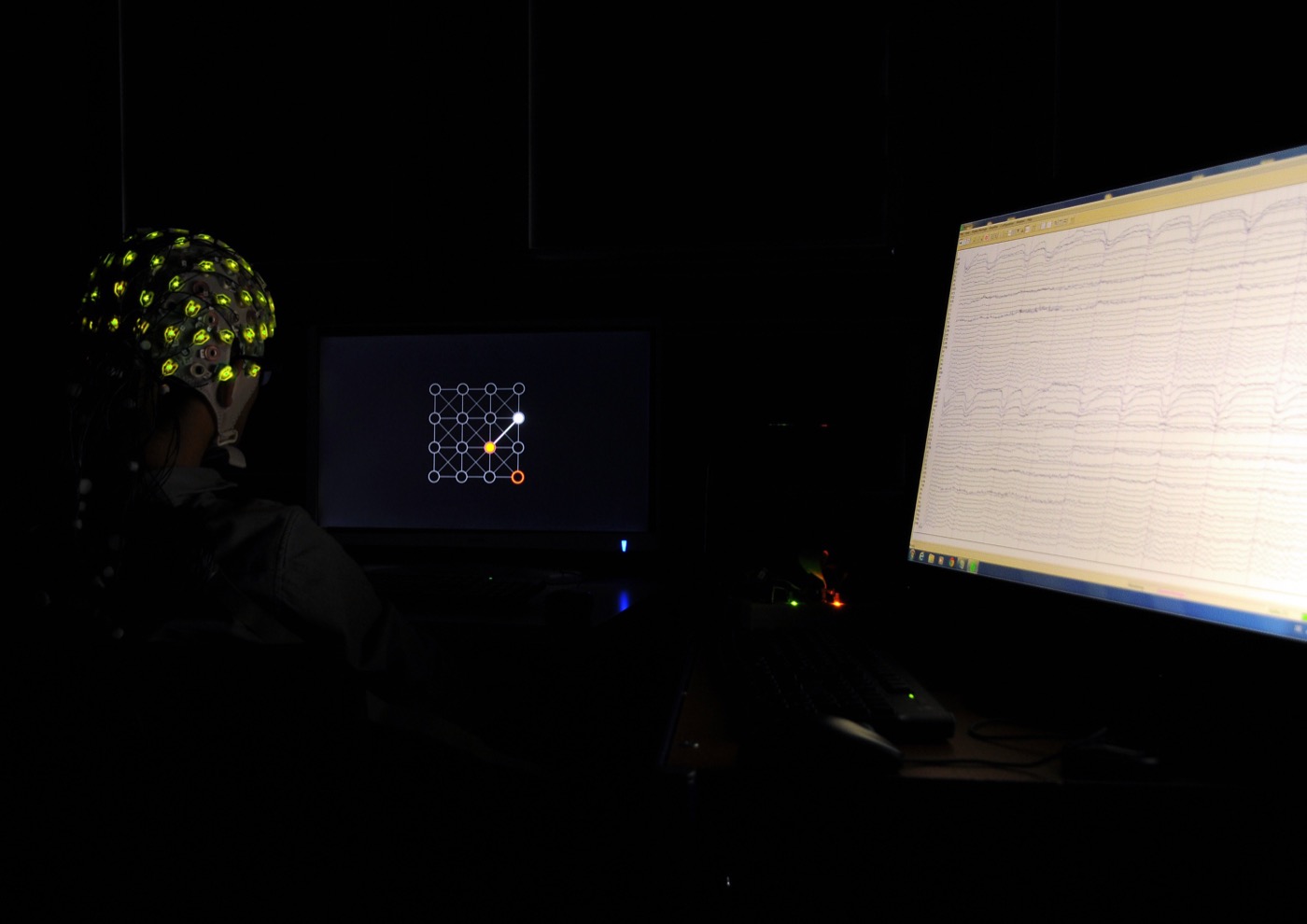
This is the most unsettling announcement of the week. Meta presented Brain2Qwerty v2, a non-invasive brain-computer interface: a magnetoencephalography scanner reads the tiny variations in the brain's magnetic fields and translates them into keyboard typing, with 61% word-level accuracy (up to 78% for the best participant), against 8% for earlier non-invasive methods. The promise: to give paralysed people a communication channel back. The question: reading intention without an implant opens as many hopes as it does vertigo.
- A grey market resells Claude tokens at a knock-down price in China. Intermediaries sell off access at 5-10% of the official price, by aggregating free accounts, shared subscriptions and stolen cards — a security and compliance headache for Anthropic.
- Taiwan raids Super Micro. Investigation into the alleged smuggling of Nvidia chips to China: control of AI hardware is tightening as its strategic value climbs.
- American election campaigns run on AI. On both sides, from profiling opponents to micro-targeting voters — OpenAI recorded 2 million requests during the election, while Europe draws a much stricter regulatory line.
- Google definitively loses its appeal against the European fine of $4.7 billion. EU justice closes eight years of battle over the abuse of dominant position with Android: the regulatory framework, for its part, is not weakening.
- Cloudflare blocks AI companies' crawlers. The web's infrastructure is starting to erect tolls against the mass scraping of data by models.
8. The wake-up call on agents
After months of promises, the week also brings its dose of lucidity. Mark Zuckerberg reportedly acknowledged internally that Meta's AI agents are not progressing at the hoped-for pace — a rare admission from one of the technology's most enthusiastic promoters. At the same time, a study of ten models shows that agents speak with a double voice, with up to a 40% gap between what they say in public and in private, which complicates the assessment of their safety. Meta has started rationing its tokens after consuming 60,000 billion in a month, and Perplexity's boss describes a model refocusing on a handful of power users spending more than $10,000 a month. The signal joins ours: agents create value, but the gap between the narrative and the field remains real — and that is precisely where a successful deployment is decided.
What to take away
Three signals to keep for a decision. One: stop overpaying for power. A model like Sonnet 5, cheaper and sufficient for most agentic uses, changes the profitability calculation of a project. Two: access remains political. The embargo lifted on Fable 5 is a reminder that a frontier model can be cut off, then returned, on a State's decision — portability between providers is not a luxury. Three: the real scarcity is moving downstream — proprietary data, know-how, the ability to put an agent into production. That is where, and not in the race for the latest model, your advantage is decided.
See you next Friday for what follows. Until then, the only question that matters has not changed: out of all this noise, what actually changes something for you?