Between 10 and 17 July 2026, four cutting-edge models were released in eight days (GPT-5.6, Grok 4.5, Inkling, Gemini 3.5 Pro), Apple sued OpenAI for theft of trade secrets, research advanced on agents and robotics, Helsing raised $1.8 billion for defence AI, and more than 200 economists, including 16 Nobel laureates, asked for the impact of AI on jobs to be prepared for. Eleven chapters, the figures, the sources, and what each fact means for a company making decisions.
- Models: four frontiers in eight days
- Apple sues OpenAI for theft of secrets
- Under the hood: research moves forward
- Open-weight: China dominates, Europe responds
- Fundraising: a record half-year
- Infrastructure and energy: the bill and nuclear power
- In business: the gap between spend and ROI
- Jobs: 200 experts and 16 Nobel laureates
- Security, data and society
- Products and agents
- What to take away
1. Models: four frontiers in eight days
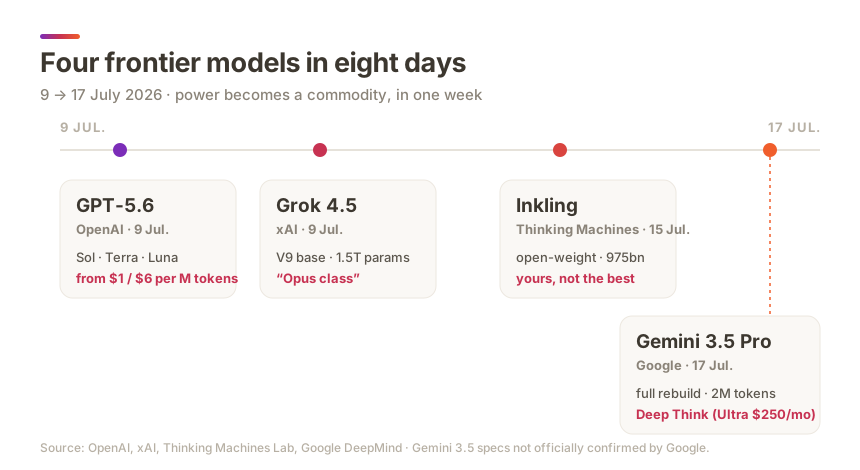
On 9 July, two models were released on the same day. OpenAI opened GPT-5.6 to all tiers (after a limited preview since 26 June), in three variants: Sol (the flagship, $5 / $30 per million input / output tokens), Terra ($2.50 / $15) and Luna ($1 / $6). The figures deserve a careful reading. On agentic tasks, Sol leads: 88.8% on Terminal-Bench 2.1, 92.2% on BrowseComp, and a score of 80 on Artificial Analysis's Coding Agent index — the highest published to date, 2.8 points above Claude Fable 5. However, on GDPval-AA v2, the knowledge-work benchmark, Fable 5 remains ahead. In other words: Sol is the best coding and browsing agent, not necessarily the best general-purpose reasoner. The choice depends on the use, not on a single ranking.
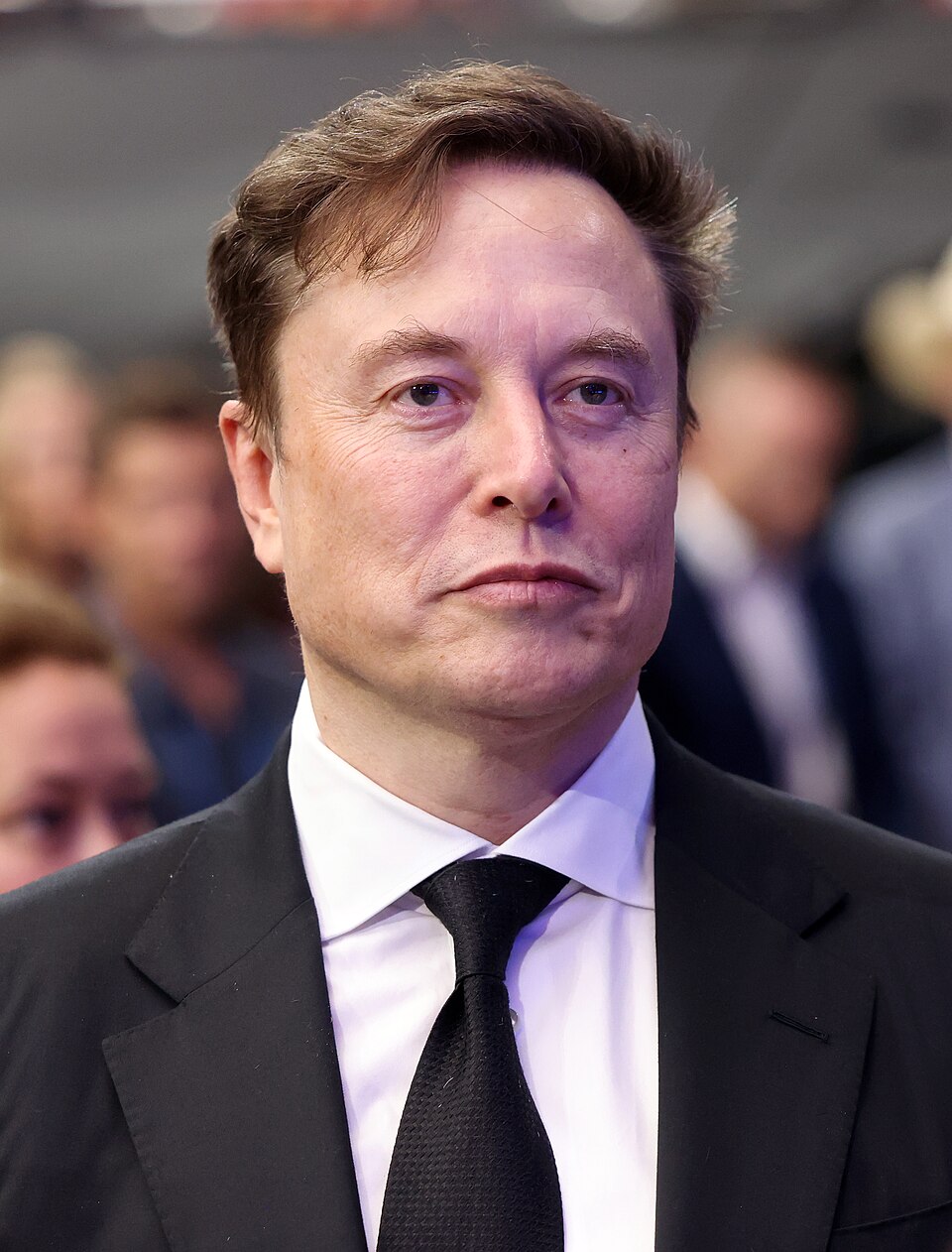
The same day, xAI delivered Grok 4.5, built on a V9 base of 1,500 billion parameters and trained with data from Cursor. Elon Musk describes it as "close to, perhaps above" Claude Opus, faster and more economical in tokens.
On 15 July, a change of philosophy. Thinking Machines, the company of OpenAI's former chief technology officer Mira Murati, published its first model, Inkling, as open-weight: downloadable and modifiable. It is a mixture-of-experts system (975 billion parameters in total, around 41 billion activated per query), trained on 45,000 billion tokens of text, image, audio and video. The lab acknowledges that Inkling "is not the most powerful model available today, open or closed": its bet is not raw performance but ownership, through its Tinker customisation platform. A bet consistent with a week in which cutting-edge intelligence is becoming commonplace.

On 17 July, Google DeepMind launched Gemini 3.5 Pro, having abandoned the 2.5 Pro architecture for a complete overhaul — its engineers having identified structural flaws in recursive tool calling and SVG generation. Reported features: a 2-million-token context window, a "Deep Think" reasoning mode reserved for the $250-a-month Ultra tier, progress on code and long tasks. Note: Google had not officially confirmed the date or these specifications at the time of writing. Finally, Meta presented Muse Spark 1.1, an agentic model with a one-million-token context at the level of GPT-5.5 and Opus 4.8, with its first paid API for developers, and Moonshot is preparing Kimi 3.
What it changes. Four cutting-edge models in eight days, and none is "the" model on every axis. Choosing a model becomes a trade-off by use (agent, reasoning, cost, sovereignty), to be revisited with every new release. Lasting differentiation is won elsewhere — in what you plug in around it.
2. Apple sues OpenAI for theft of secrets
On 10 July, Apple filed a federal complaint accusing OpenAI of a coordinated theft of trade secrets related to its future devices. According to the document, "at every level, from members of its technical team to its head of hardware, and in coordination with its partners, OpenAI stole Apple's trade secrets and confidential information". The targets are former Apple staff who moved to OpenAI, notably Tang Tan, OpenAI's head of hardware and a former Apple vice-president, accused of inciting candidates in interviews to hand over secrets, and Chang Liu, a member of the technical team, who is accused of downloading dozens of confidential hardware files. The complaint also cites io Products, Jony Ive's company.


The context clarifies what is at stake: more than 400 former Apple employees now work at OpenAI, and the new version of Siri, expected in the autumn, will be based on Google's Gemini, not on OpenAI's technology — after a partnership struck in 2024. Same week, same logic elsewhere: Microsoft is reportedly training its salespeople to disparage OpenAI and Anthropic to customers, while cutting 4,800 jobs.
3. Under the hood: research moves forward
Behind the product launches, the week delivered research advances that prepare tomorrow's agents. Google DeepMind published a training method called "prospective credit assignment": teaching a model to anticipate the effect of its decisions several steps ahead. On SWE-Bench (fixing real GitHub tickets in large codebases), the method markedly improves the success rate on tasks requiring more than ten steps — precisely the bottleneck for reliable autonomous agents.

- Boston Dynamics integrates Gemini Robotics-ER 1.6 into its Spot robot dog and its Orbit inspection platform, with Google Cloud and DeepMind: spatial reasoning, autonomous decision-making and continuous learning in an industrial environment.
- Meta rolls out its Business Agent Platform worldwide, so that companies can build and run agents at scale, and launches Meta Compute, which resells its surplus AI infrastructure to external customers.
- The Allen Institute for AI (AI2) sheds light on hallucinations. New work explains why language models invent facts — a prerequisite for fixing them, and a reminder that reliability remains an open project.
4. Open-weight: China dominates, Europe responds
Four Chinese models — DeepSeek V4, Kimi K2.6, GLM-5 and Qwen 3.5 — hold four of the top five places in the global open-weight ranking this week, and Moonshot is preparing Kimi 3, expected to close the gap with Opus 4.8. The trend, already visible with DeepSeek V4 and Zhipu's open source, is settling in as a structural fact: open weights, free and modifiable, increasingly speak Mandarin.

The European response: Mistral confirmed a new open-weight model in early access this month, the first piece of a new family. Arthur Mensch makes it an argument for "strategic autonomy": running, inspecting and modifying your models without depending on a supplier's terms or on the jurisdiction of a foreign state — an argument reinforced since the American embargo on Fable 5. The company is financing its €4 billion of data centres in France and Sweden, partly with Gulf capital: European autonomy is still being built with money that is not European.
5. Fundraising: a record half-year
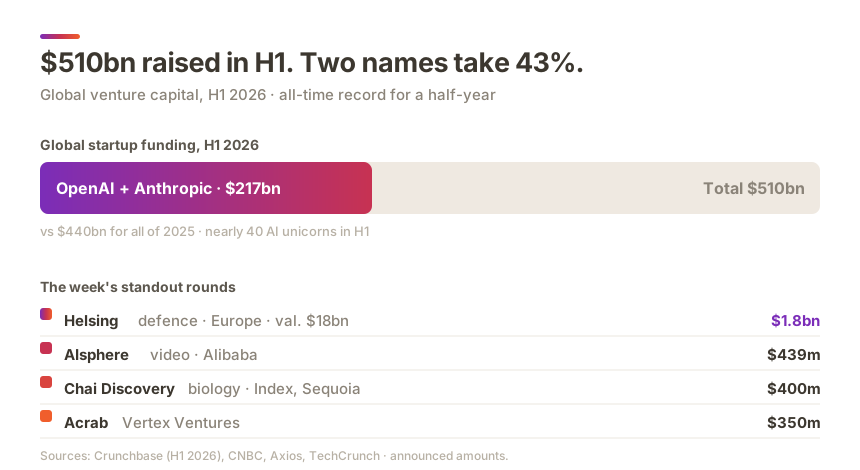
Global venture capital reached $510 billion in the first half of 2026, a record above the $440 billion invested over the whole of 2025. OpenAI and Anthropic alone captured $217 billion, or 43% of the half-year's startup funding, and nearly 40 AI startups became unicorns.
The week's most notable round is not a model lab: German defence-tech company Helsing raised $1.8 billion (valuation $18 billion) from JPMorgan, Lightspeed, Iconiq, Goldman and the Canadian pension fund CPPIB. It announces its first American factory in West Virginia to produce the HX-2, an AI-piloted attack drone already deployed in Ukraine and tested by the US Army, at more than 2,000 units a month eventually. AI leaves the browser and enters steel.
- "World models" attract capital. Odyssey (founded by autonomous-driving pioneers) raised $310 million at a $1.45 billion valuation, with Amazon and AMD Ventures; AI that simulates the physical world becomes an investment thesis in its own right, also carried by Yann LeCun's AMI Labs.
- AIsphere raises $439 million (Series C) for AI video, under Alibaba's aegis.
- Chai Discovery closes $400 million from Index, Kleiner Perkins and Sequoia: computational biology attracts capital.
- Acrab raises $350 million (Vertex Ventures), and SpaceX lowers its IPO price to $135 ahead of a Starship launch.
- The first GPU financiers are turning to inference chips in a $400 million deal: money now follows the cost of running, not only the cost of training.
6. Infrastructure and energy: the bill and nuclear power
The four cloud giants (Amazon, Google, Microsoft, Meta) plan to commit nearly $250 billion to data centres in 2026, against around a hundred billion in 2025. To sustain demand, Nvidia issued $25 billion of bonds and is multiplying revenue-sharing agreements with its own customers — an arrangement that supports its sales in the short term but complicates the reading of future revenue. Its share price fell by nearly 11% in June, and the financial press openly speaks of a "debt bubble" backed by gigawatts, following on from the Bank for International Settlements warning mentioned in early July.
The constraint becomes physical: energy. This week, Valar Atomics and Nvidia announced a study for a near-waterless data centre powered by a small 30-megawatt modular reactor in Utah. The movement runs deep: Microsoft, Google, Amazon and Meta have committed more than $50 billion to nuclear (13 projects announced, 9.8 GW), with the first nuclear electrons for an AI data centre expected in 2027 with the restart of Three Mile Island. Computing is no longer just a matter of chips: it is a matter of megawatts and cooling.
7. In business: the gap between spend and ROI
Behind the euphoria of the funding rounds, field studies tell a more nuanced story. By the end of 2026, 40% of enterprise applications will embed specialised agents (against less than 5% in 2025, according to Gartner), and 31% of organisations already have at least one agent in production — banking and insurance in the lead (47%), healthcare and the public sector lagging (18%). But the return on investment is slow to come: only 29% of organisations see a significant ROI from generative AI, and 23% for agents. "Power users" gain up to five times in productivity, but 79% of organisations say they face adoption difficulties (up by double digits on a year), and more than half of executives acknowledge that AI is putting their organisation under strain.
8. Jobs: 200 experts and 16 Nobel laureates
On 13 July, more than 200 economists and researchers, including 16 Nobel laureates, signed a letter coordinated by Stanford's Digital Economy Lab. It asks political and industry leaders to "act now" and to build "incentives, safeguards and institutions" so that AI complements humans rather than replacing them. It warns of "massive job displacement" and of a transformation "greater than the industrial revolution, but over a far shorter period", while pointing to possible gains in living standards. Its organiser, Anton Korinek: "waiting for certainty means arriving too late".

The same week, Amazon announced 14,000 job cuts — after 16,000 in January — with Andy Jassy indicating that efficiency gains from AI will reduce headcount. Since the start of 2026, American tech has cut 140,000 jobs, with AI cited in nearly a quarter of the cuts. Jeff Bezos, conversely, predicts a labour shortage. The real subject is neither "AI destroys everything" nor "AI creates everything": it is the lag between the disappearance of jobs and the appearance of new ones, as our timeline of replacement showed.
- The Federal Reserve enters the debate. Governor Michael Barr devoted a speech (14 July) to AI and its effects on the economy and jobs.
- 16% of Americans think AI will have a positive impact on society, according to a new study — a perception gap that is becoming a political subject.
- The European Union strengthens the AI Act for frontier models through a July action plan, having postponed in May the entry into force of "high-risk" obligations to December 2027.
9. Security, data and society
- Anthropic expands its Glasswing cyber-defence programme from 50 to 150 partner organisations in 15 countries — energy, healthcare, open-source projects.
- A leak suggests the music generator Suno scraped YouTube to train its models: the question of training data remains generative AI's legal weak point.
- Patreon is starting to block AI bots instead of asking them to refrain. After Cloudflare, the web's infrastructure is putting up tollgates against content scraping.
- Apple Intelligence is approved in China with Alibaba (Qwen) and Baidu: the entry price to the world's largest smartphone market runs through local partners and regulatory oversight.
10. Products and agents
- OpenAI equips Codex with a $230 physical keyboard, launches ChatGPT Work for business, and lets you order a DoorDash from the command line.
- Google brings AI video closer to the user: Google Vids lets you appear in your own generated videos, AI Mode connects to third-party apps, a new smart speaker is based on Gemini.
- Roblox adds AI game creation to its mobile app, bringing generation right into players' pockets.
- Anthropic strengthens its governance and uses. Former Fed chair Ben Bernanke joins its Long-Term Benefit Trust, Claude for Teachers arrives for education, and $10 million goes to Canadian AI research.
| Area | Fact | Significance |
|---|---|---|
| Models | GPT-5.6, Grok 4.5, Inkling, Gemini 3.5 Pro in 8 days | Cutting-edge power becomes commonplace; choosing a model becomes a trade-off by use |
| Intellectual property | Apple sues OpenAI for theft of secrets | Value shifts to the device, the talent and the channel |
| Research | DeepMind (long agents), Boston Dynamics × Gemini Robotics | Agent reliability and physical robotics progress |
| Open-weight | 4 Chinese models in the global top 5 | Open weights concentrate in China; Europe responds with sovereignty |
| Capital | $510bn in H1, Helsing raises $1.8bn | Record concentration; AI enters weaponry |
| Energy | Valar × Nvidia (SMR), $50bn committed to nuclear | The constraint becomes physical: megawatts and cooling |
| Business | 40% of apps with agents, but 29% ROI | Value lies in deployment, not in the model |
| Jobs | 200 experts and 16 Nobel laureates, Amazon cuts 14,000 jobs | The lag between job destruction and creation must be anticipated |
11. What to take away
Four points for deciding. One: with four frontier models in eight days and falling prices, choosing a model is no longer a strategic decision but a trade-off by use; the strategy lies in what you plug in around it. Two: the lasting advantage is what cannot be copied — proprietary data, distribution, know-how, teams; that is precisely the subject of Apple's complaint. Three: value comes not from the model but from deployment — 40% of apps with agents by the end of 2026, but fewer than a third of companies seeing an ROI; the gap is closed by scoping and integration, not by the race to the latest model. Four: the question of jobs is no longer theoretical — 16 Nobel laureates, the Federal Reserve and Amazon (14,000 jobs) put it on the table in the same week; anticipating the recomposition of your professions becomes a concrete advantage.